
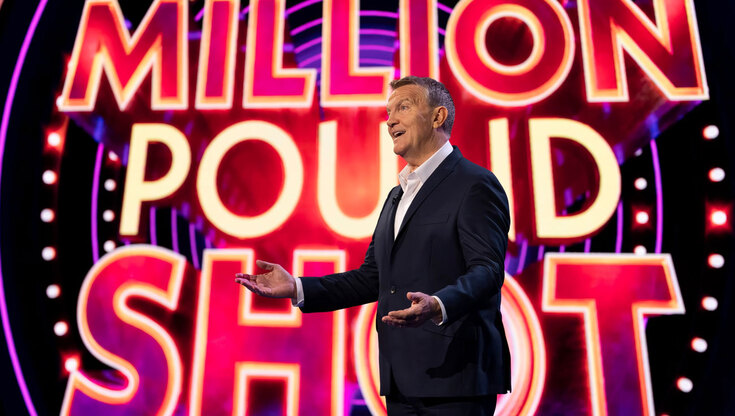
For about half an hour on Sunday 1 November, Channel 4 looked like it had commissioned the most reckless quiz in British television history.
Million Pound Shot arrived with almost no publicity. No previews for the press, no trailer online, just Bradley Walsh, a 9pm slot and the promise of “one huge secret twist”. On paper it was a standard shiny-floor format with a seven-figure jackpot. The catch was that contestants were playing with their own money.
That alone was enough to make people uneasy. Then came Reece.
The contestant who could not stop
Reece was introduced as a history teacher with his girlfriend watching from the audience. He started losing in the trivia rounds and kept going. He talked about borrowing from friends, about credit cards, about loans. When he lost again, Walsh, in full twinkly host mode, nudged him towards buying another ball.
It was hard to watch, and it was meant to be. Somebody in the studio audience finally stood up and asked whether nobody else thought this was wrong. Reece and his girlfriend were led off, visibly upset, and the show cut to an ad break.
When it came back, Walsh dropped the act. “What you just witnessed was a performance by actors,” he told viewers. Reece, his fellow contestants Mark and Helen, the floor manager and the audience member who objected were all in on it. The rest of the studio audience was not.
What the show was really about
The second half was a different programme. Walsh explained that everything in the fake game had been built from techniques the gambling industry is accused of using. Psychologist Dr Steve Sharman took the format apart piece by piece. The coloured balls stood in for chips and credits, which make money feel less like money. The big physical buttons gave players a sense of control over an outcome they could not change. The “bonus ball” handed to a losing contestant was a free bet by another name.
Reece turned out to be based on a real person. Patrick Foster, a former teacher, started gambling at university and did not place his last bet until 2018. By then he had run up debts of around £250,000 over 13 years. “Suddenly I had a betting shop and a casino in my pocket,” he said of the move from the high street to his phone.
As a piece of television it is a clever idea. People who would never sit through a documentary about gambling will happily watch Bradley Walsh host a quiz. The obvious comparisons are Derren Brown and Ghostwatch, the BBC’s 1992 Halloween hoax, and viewers were making both before the reveal had even happened. Walsh said afterwards on Instagram that he knew it was “a bit of a shock”, but that “this is a vital subject and that’s exactly why I wanted to do it.”
The industry’s reply
Not everyone was impressed. The Betting and Gaming Council, which represents most licensed operators in Britain, put out a statement the next day calling the show “a misleading portrayal of Britain’s regulated betting and gaming industry”.
Its complaint is that the fake game showed things a licensed operator is not allowed to do. Gambling with a credit card has been banned since April 2020. A contestant who says on air that he has just been made redundant, or that he is borrowing to play, is showing exactly the warning signs an operator is required to act on. And the “losses disguised as wins” trick, where a game celebrates a payout smaller than your stake, is already prohibited. The BGC says it sent the programme makers a detailed response before broadcast. It also points out that around 22.5 million adults in Britain have a bet in a typical month.
Channel 4 is standing by the show. A spokesperson said it was “meticulously researched and fact-checked”, and that the BGC was offered a right of reply.
So who is right?
Probably both, a bit. The show was a dramatisation, and a dramatisation picks the worst case. But the rules the BGC lists exist because those things used to happen, and they only apply to operators who hold a licence.
That is the useful part for anyone who does play. The gap between a licensed site and an unlicensed one is the whole argument. Comparison sites such as Slot Fruit list only casinos licensed by the UK Gambling Commission for that reason, and the Commission’s own public register lets you check any operator in about a minute.
Whether Million Pound Shot changes anything is another matter. But a week on, people are still arguing about a Sunday night quiz that never existed, which is more than most real ones manage.

Login to Geektown