
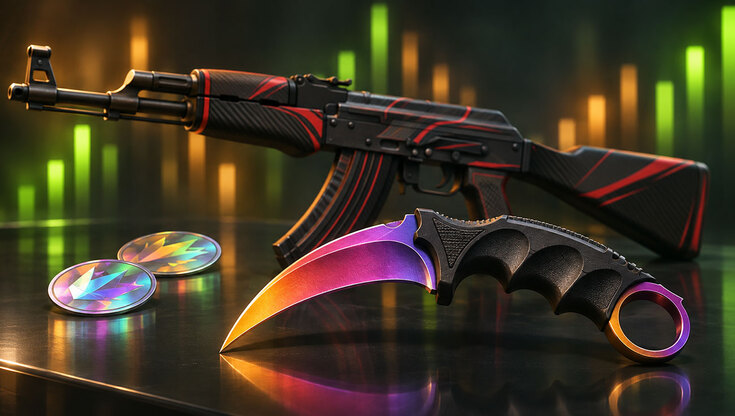
A knife could rise for much of a year and still finish cheaper than it started. A plain pistol skin could suddenly attract buyers because Valve changed a drop pool. Both happened during the years after Counter-Strike 2 arrived. The useful story behind skin prices is how particular items responded to changes in the game.
Between 2023 and late 2026, those changes reached well beyond new artwork. Existing inventories moved into CS2, players gained more freedom to customise weapons, and a single update opened another way to create knives and gloves. Each affected a different part of the market.
If you’re planning to buy CS2 skins, check the history of the exact version you want alongside current offers. A regular Field-Tested rifle has its own market. A StatTrak copy or a particularly desirable pattern can follow a different price path, even when the finish name matches.
2023 brought existing inventories into a different looking game
CS2 preserved players’ CS:GO inventories. Valve also confirmed that existing items would benefit from Source 2 lighting and materials. That combination mattered to collectors. Their old purchases remained usable, while reflective finishes could look noticeably different in the new game. 1
A Fade knife gives a simple example of the connection. Its appearance depends heavily on how light catches the coloured blade. A change to rendering can alter what a player likes about the same item without changing how many copies they own. Buyers still have to decide what that new appearance is worth to them.
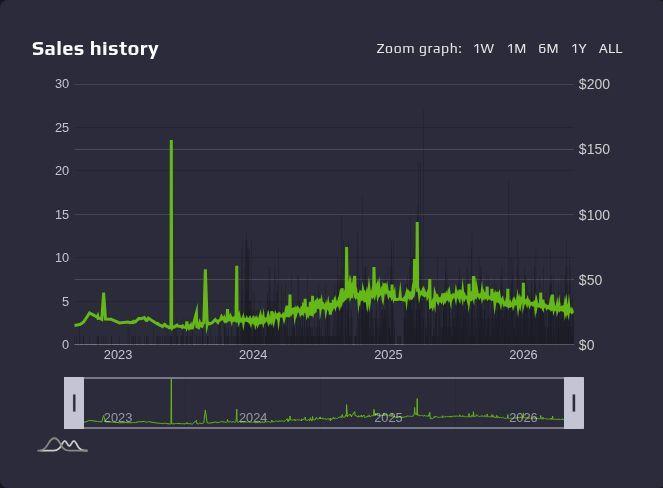
The sales-history chart for AK-47 | Redline below provides another perspective. It shows a broad change in the price band across several years, with isolated spikes standing well above surrounding activity. Picking the tallest spike would give a very different impression from looking at the sustained trading range.
That distinction matters when someone shares a dramatic inventory valuation. An exceptional transaction doesn’t tell you what an ordinary copy will fetch today. The condition and any sticker craft still need checking.
2024 expanded what players could make and collect
February’s A Call to Arms update introduced the Kilowatt Case and the Kukri Knife. It also enabled flexible sticker placement and allowed up to five stickers on a weapon. These were changes to both the supply of cosmetics and the ways players could use them. 2
New releases face a particular pricing problem. The earliest sellers can ask a premium while few copies are available. More openings can then put additional copies on sale. A launch price therefore needs a date attached to it; it isn’t a permanent starting value for every later comparison.
Custom sticker placement changed the creative possibilities too. Players could build combinations around a specific part of a weapon rather than relying on the old fixed slots. Economically, that gave a buyer another reason to want a particular sticker. Whether demand actually lifted its price still depended on available supply.
By this point, talking about all skins as one market was already an awkward shortcut. A newly released knife and an established rifle skin faced different supply conditions. Their charts could diverge without either chart being wrong.
2025 showed how quickly Valve could change scarcity
The major break came with Valve’s update dated 22 October 2025. Trade Up Contracts could now turn five regular Covert items into a regular knife or gloves from an eligible input collection. Five StatTrak Covert items could produce a StatTrak knife. That created an additional route for generating these items. 3
The important detail was the relationship between the inputs and the output. Buyers could consume eligible Covert skins to create a knife or gloves, so the value of those inputs became connected to the potential results. Existing owners also had to reassess the supply of their knives.
SteamAnalyst’s annual report gives a concrete view of the repricing. Its Steam Community Market averages show several knives substantially lower in December than during the period immediately before the update. 4
| Regular knife and condition | Jan 2025 | 1 to 22 Oct 2025 | Dec 2025 |
|---|---|---|---|
| Butterfly Knife | Safari Mesh Field-Tested | $936 | $1,388 | $821 |
| Gut Knife | Fade Factory New | $332 | $395 | $248 |
| Kukri Knife | Fade Factory New | $835 | $578 | $323 |
Historical Steam Market averages in US dollars, reported by SteamAnalyst. These figures are separate from the white.market sales-history screenshots and current seller asking prices.
The Butterfly’s December average was about 41% below its average for 1 to 22 October. The Kukri had already fallen between January and that October period. Calling every decline an overnight crash would miss part of its history.
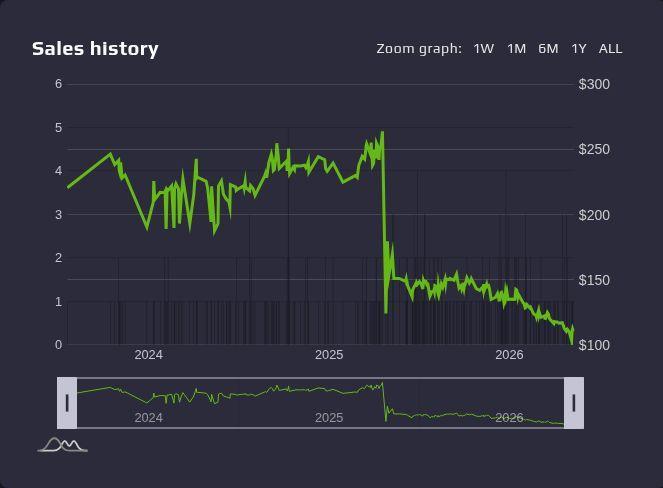
The white.market chart for Gut Knife | Fade offers a second view, from a different marketplace. Its sharp fall is visible within a longer history of trading. Keep the datasets separate when reading them; a cash-market chart and Steam averages don’t use interchangeable prices.
2026 brought another reminder about drop supply
On 21 January 2026, Valve added the Achroma and Harlequin collections to Weekly Care Packages. It removed Safehouse and Dust 2, along with the 2018 Nuke and 2018 Inferno collections, from that weekly drop list. Removing a collection cuts off that particular source of new copies. It doesn’t remove the items already in inventories. 5
White.market’s report on the January collection changes and their price impact recorded a 520% weekly rise for Factory New P250 | Sand Dune and a 390.82% rise for Factory New MP7 | Fade. Those are reported moves for specific versions during that reporting window, rather than returns for the whole market or prices that necessarily held afterwards.
A modest-looking skin could therefore attract attention because its supply route changed. Appearance alone couldn’t explain the move. Buyers following a surge also needed to check whether enough actual trading supported the new asking prices.
Valve kept adding alternatives. March’s Dead Hand release introduced 17 weapon finishes and 22 new gloves as rare special items. New releases and changes to older drop pools continued to reshape what players could obtain. There was no single price trend that described every item through 2026. 6
Stickers followed their own price histories
Tournament stickers need a separate comparison. A Natus Vincere Holo from Stockholm 2021 and one from Paris 2023 carry the same team’s name, but they are different collectibles. The event and finish belong in any price search.
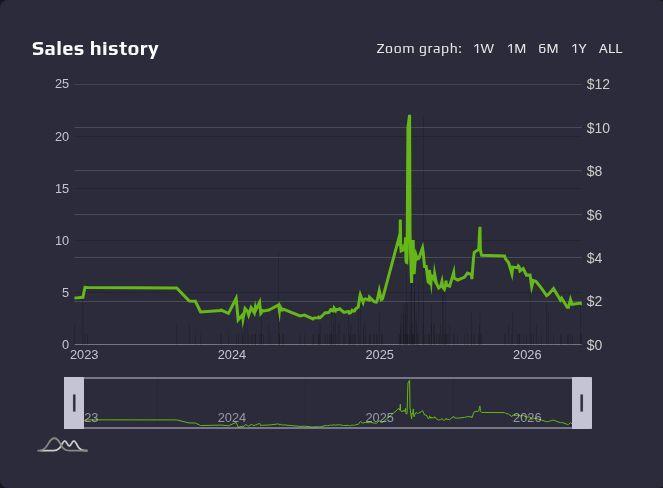
Players looking for the best cs2 stickers can compare the exact tournament edition with its available history before choosing a design. The Stockholm 2021 NAVI Holo chart below shows a pronounced 2025 peak followed by lower prices. Being an older tournament item didn’t keep its price moving upwards.
Unused stickers also trade separately from completed crafts. Applying one consumes the loose sticker, while the resulting weapon has to find a buyer who likes that particular combination. You can’t simply add the full unused sticker price to the rifle’s value.
For a player building a loadout, the practical question is whether the finished look is worth the cost. A sticker that has already passed through a speculative spike can still be an appealing cosmetic purchase at a lower price.
How to compare a past price with an offer today
Start by matching the item. For a weapon, that means its condition and version as well as the finish. Inspect the float and check whether a pattern carries a premium. For stickers, match the tournament and the finish before comparing prices.
Then use the same marketplace and currency for both dates. Steam Wallet prices and cash-market prices reflect different buying and selling conditions. If you’re budgeting in pounds but reading a dollar chart, changes in the exchange rate can also change your eventual cost.
On white.market, an item’s Sales history panel offers several time ranges, including 1Y and All. The longer view helps put a recent move in context. All refers to the history available for that item, which may begin well after the item was originally released. Read the price against the dollar axis on the right.
Check the activity around a move as well. A single unusual sale provides weaker evidence for a new normal than repeated transactions near the same level. White.market’s report on Steam’s detailed CS2 item pages explains how the updated pages brought more item information and trading-volume data into the comparison process.
Finish with the live offer and any costs that apply to your payment. A chart can explain how yesterday’s buyers behaved. It can’t promise that the skin you choose will rise next month. The most useful lesson from 2023 onwards is to check the update behind a price move and the exact item behind the headline.

Login to Geektown