
There’s been a fair bit of trepidation around Star Trek: Voyager – Across the Unknown. Trek fans are not the easiest crowd to please, and when you announce a strategy/management game built around one of the franchise’s most divisive 90s series, expectations get… complicated.
So let’s get this out of the way early: this is not a massive AAA blockbuster. It’s not a cinematic, fully voice-acted, photoreal epic. It’s also very much not a cheap mobile port masquerading as something bigger. What it is, instead, is a solid, surprisingly engaging “indie-feel” strategy game that understands its scope and largely sticks the landing.
And I had a genuinely enjoyable time with it.
I’ll admit, it’s been a while since I last watched Voyager. I’ve seen every episode of every Star Trek series at least once, but I’m not someone who can recite every plot beat or moral dilemma in forensic detail. In some ways, that probably helped. Because Across the Unknown pulls heavily from the TV show’s storyline, sometimes very directly, but gives you the freedom to remix it.
That remixing is where the fun lies.
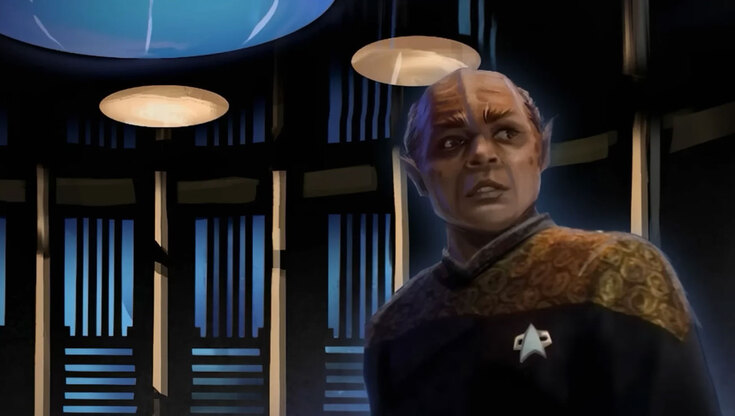
You can separate Tuvix. You can choose not to. You can allow Seska to attempt redemption. You can even, in one hilariously short run, meet the Caretaker in the opening act and effectively say, “Forget the Ocampa, take us home,” and the game simply lets you do it. Roll credits. Delta Quadrant tour speedrun complete.
That freedom to play with established events keeps things feeling fresh, even if you broadly know what’s coming next.
The core of the game is ship management and exploration. Voyager is presented in a cutaway view, and rebuilding or upgrading systems takes time — measured in “cycles.” Researching new technology, repairing damaged sections, and expanding capabilities requires engineering teams, resources, and careful power management from the warp core. Nothing happens instantly. You’re juggling limited crew, limited fuel, and limited patience.
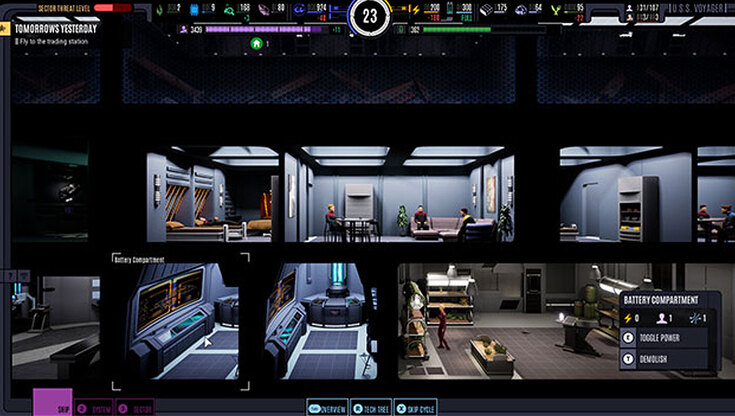
Some players will likely find the resource gathering a bit of a grind. You scan systems, gather materials, and balance fuel costs as you move through the Delta Quadrant. Personally, I didn’t mind it. The pacing works within the structure of the game. Rebuilding Voyager should feel like effort. The quiet loops of scanning, collecting, and planning help sell the idea that you’re a long way from home and every decision matters.
The maps change between playthroughs, which adds some replayability, though I’ve only done one full run (two if you count my brief “abandon the Ocampa” experiment). I can’t yet say how deeply the side missions vary between runs, but the framework suggests there’s room to experiment with different moral and strategic paths.
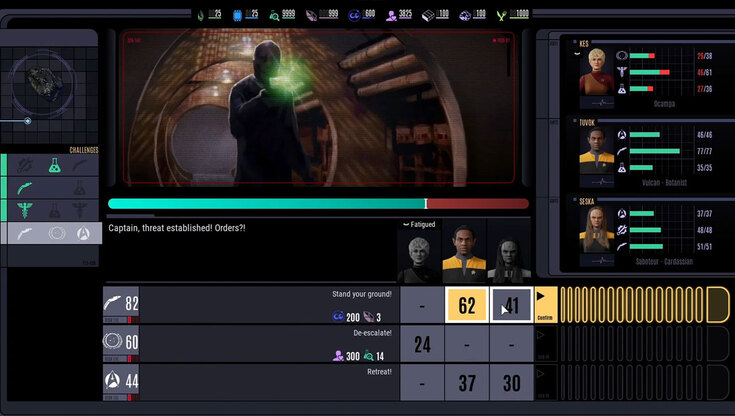
Away missions play out more like visual novels. You assemble your team based on skills and traits — medical, diplomacy, security, and unique abilities like Tom Paris’ piloting or Chakotay’s survivalist background. Encounters are resolved through dialogue choices and skill checks, with varying outcomes and rewards. There’s not a huge amount of direct control, but the system is engaging enough to make you think carefully about who you send where. And yes, there is genuine risk. Crew can be injured. Crew can die. You can derail canon in meaningful ways.
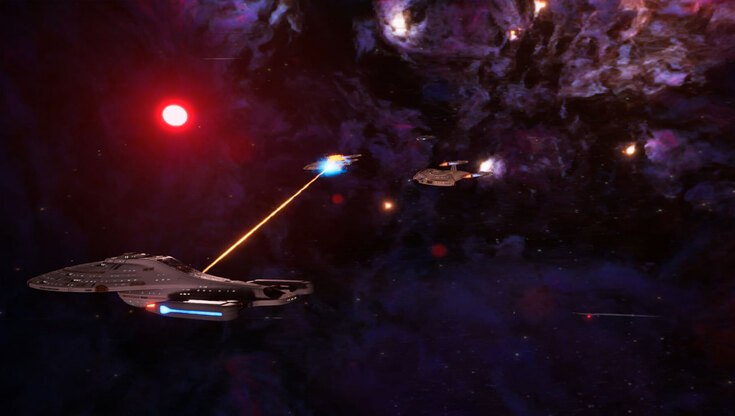
Space combat is simple but effective. It’s real-time with pause, allowing you to set attack priorities, trigger special abilities, and direct repairs before the warp core turns into a cautionary tale. You’re not manually piloting Voyager — this isn’t a dogfighting sim — but it captures that tactical, bridge-level feel well enough.
Presentation-wise, it’s solid. Character likenesses are recognisable and do a good job of grounding you in the show’s world. The majority of the game isn’t voice-acted, and that’s absolutely fine for what it is. In fact, the quieter presentation arguably suits the management-heavy structure.
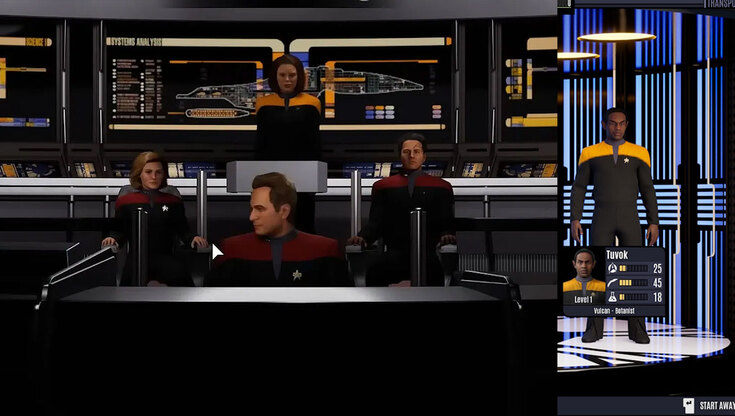
There is some original voice work from the series. Robert Duncan McNeill returns as Tom Paris, and Tim Russ as Tuvok, delivering officer’s log entries at the start of new chapters. Those moments add a welcome layer of authenticity.
The one absence that stands out is Kate Mulgrew as Kathryn Janeway. When you eventually manage to return to Earth, there’s a captain’s log, but it’s presented in text rather than voiced. It’s the one point where you really feel her absence. Whether it was a budget issue or a scheduling one, it’s a shame that moment couldn’t have been fully realised.
In terms of polish, my experience was smooth. No crashes in my full playthrough. I encountered one minor bug where text failed to display during part of a mission, but it didn’t block progression and was more of a hiccup than a problem.
Ultimately, the key to enjoying Star Trek: Voyager – Across the Unknown is going in with the right mindset. Don’t expect a huge AAA spectacle. Think of it as a thoughtful, systems-driven, “indie” strategy game that lets you revisit and reshape Voyager’s journey through the Delta Quadrant.
One full run took me around 22 hours, and there’s clear replay value in trying different choices and outcomes.
Sorry Tuvok. Sorry Neelix… This time, Tuvix lives.
Star Trek: Voyager – Across the Unknown. is out now on Steam for PC, Nintendo Switch 2, PlayStation 5 and Xbox Series X/S.


Login to Geektown