
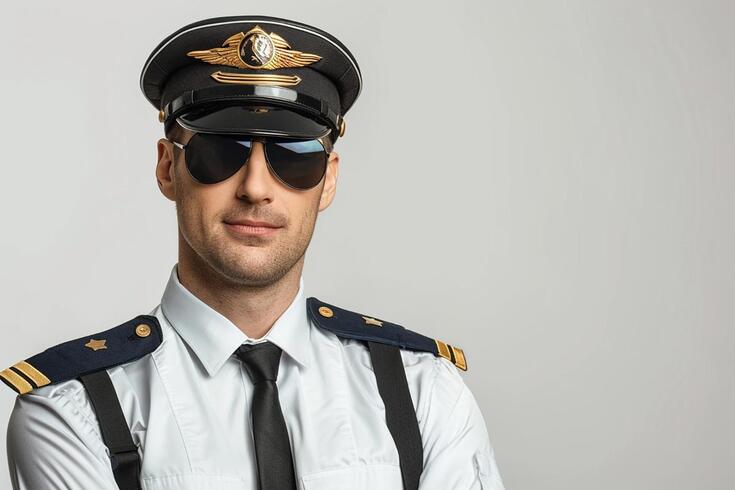
Some film costumes date the moment the credits roll. Others quietly become shorthand for an entire mood, instantly readable across a crowded room without a single word of explanation. The olive flight suit, the leather bomber, the mirrored aviators slung on with practised nonchalance: four decades after the original film hit cinemas in 1986, the Top Gun look sits firmly in that second category. It has outlasted its own soundtrack, survived a long-awaited sequel, and earned a permanent spot in the fancy-dress hall of fame that geek culture loves to raid.
What makes it so durable is worth unpicking, because the answer says a lot about why certain screen looks become costume staples while others gather dust.
The look that outlived its decade
The genius of the Top Gun aesthetic is that it works on two levels at once. It is specific enough to be recognised immediately, yet generic enough that you do not need to be a dead ringer for any particular actor to pull it off. A flight suit and aviators communicate the whole concept on their own. Add a set of dog tags and a squadron patch and you have crossed from “person in a jumpsuit” into full character territory.
That accessibility is precisely why a rail of Top Gun Costumes tends to empty out first whenever a film-themed night or 80s party appears on the calendar. The barrier to entry is low, the payoff is high, and almost anyone can wear it without feeling self-conscious, which is more than can be said for most screen-accurate cosplay.
There is also a nostalgia engine humming underneath. The film romanticised naval aviation so effectively that it reportedly sent recruitment interest soaring, and the imagery of fast jets and call signs has been embedded in popular culture ever since. For anyone curious about the real machinery behind the Hollywood gloss, the Imperial War Museums hold extensive aviation collections that show how the genuine history of jet flight compares to its big-screen makeover. The costume borrows that mystique without asking you to know a single thing about thrust-to-weight ratios.
Building a look that reads instantly
If you want the outfit to land, think in layers of recognition rather than buying a single item and hoping.
The foundation is the jumpsuit or flight suit. It carries most of the visual weight, and the colour and patches do the heavy lifting before anyone clocks the details. From there, the accessories are what separate a vague “pilot” impression from an unmistakable homage. Aviator sunglasses are non-negotiable, ideally the teardrop frame that has become inseparable from the character. A bomber jacket layered over a plain white tee gives you an off-duty version of the same world, useful if a full jumpsuit feels like a commitment too far for a pub crawl.
Dog tags, a name badge with a call sign of your own invention, and slicked-back hair finish the job. The trick is restraint disguised as effort. The look is meant to feel effortless and a little cocky, so over-accessorising actually weakens it. One or two confident choices beat a costume drowning in props.
A quick word on practicality, since geeks tend to be the ones still standing at 1am. Flight suits run warm under venue lighting, so plan your evening accordingly and keep the jacket as a layer you can shed rather than your only top.
From the squadron to the convention floor
Where this costume really earns its keep is in numbers. Worn solo it is a solid choice. Worn as a group it becomes a genuinely good bit.
A squadron of friends in matching suits, each with a different call sign stitched or pinned on, turns a simple outfit into an ensemble that photographs brilliantly and gives everyone a role to play. It scales effortlessly, works for stag and hen weekends as readily as for themed club nights, and sidesteps the awkward problem of coordinating wildly different costumes that never quite cohere. There is a reason it has become a reliable group default.
Convention culture has embraced it too, partly because it slots neatly alongside the broader appetite for screen-accurate dressing up without demanding the budget or build time of, say, full armour. You can assemble a respectable version in an afternoon and still hold your own next to people who have spent months on foam fabrication. For a relaxed cosplay or a film marathon meetup, that ratio of effort to impact is hard to beat.
It also crosses generational lines in a way few costumes manage. Parents who grew up with the original and kids who came to it through the sequel can dress as the same idea and both feel they are referencing something that belongs to them. That shared cultural shorthand is rare, and it is a big part of why the look keeps reappearing year after year.
It also flexes to fit any budget or ambition. At the lighter end, a jacket and a pair of aviators thrown over your own clothes will read instantly to anyone in the room. At the other, a full jumpsuit with custom patches, dog tags, and a meticulously chosen call sign turns the same idea into a centrepiece. That range is unusual. Most costumes commit you to a single level of effort, whereas this one lets a casual wearer and a committed one stand side by side and both feel they nailed it. For a mixed group with wildly different enthusiasm levels, that flexibility is quietly invaluable.
The bigger point about costume longevity
The Top Gun outfit is a useful case study in what makes a fancy-dress idea stick. It is simple to read, forgiving to wear, easy to scale into a group, and tethered to a film whose cultural footprint shows no sign of shrinking. Costumes that tick those boxes tend to become evergreen, while more elaborate or hyper-specific looks burn bright for one season and then vanish.
For anyone planning ahead, that durability is the real selling point. An aviator look bought this year will not feel stale next year, or the year after. It will simply wait in the wardrobe until the next 80s night, film party, or convention rolls around, ready to be deployed at a moment’s notice with the addition of a fresh attitude and the same pair of sunglasses.
In a hobby that often rewards complexity, there is something to be said for a costume that wins through sheer iconic clarity. The flight suit never went out of style because it was never really about fashion in the first place. It was about an instantly understood character, and characters that good do not expire.

Login to Geektown