
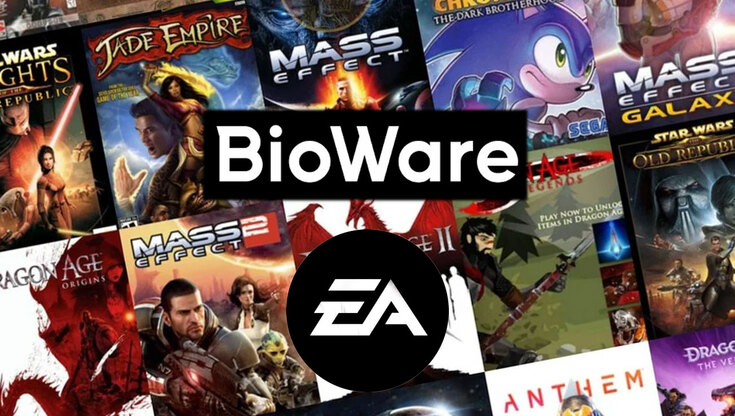
There are certain names in gaming that mean something beyond the logo on the box. For RPG fans, BioWare was one of them. From Baldur’s Gate and Star Wars: Knights of the Old Republic to Mass Effect and Dragon Age, it was the studio that could make you spend 100 hours saving the world, only to spend another hour worrying whether you’d upset a fictional companion.
Now Electronic Arts has confirmed that BioWare is closing, and development of the next Mass Effect game has been cancelled. It’s miserable news, particularly for the people losing their jobs and anyone still hoping to return to the Normandy. But it also raises a rather uncomfortable question: was the BioWare we loved already gone?
According to Bloomberg, EA is cutting around 400 jobs across the company, including approximately 50 at BioWare. But that figure isn’t simply another round of layoffs at the developer. Those 50 people were reportedly almost the entire remaining BioWare team, and EA is shutting the studio down completely. For a developer that once had hundreds of employees working across multiple projects, it’s an astonishingly small number. And it suggests EA isn’t so much dismantling the BioWare of old as finally turning off the lights on what remained.
The long, slow disappearance of BioWare
BioWare’s decline didn’t happen overnight, and it would be unfair to pretend everything went wrong the moment EA acquired the company in 2007. Some of its best-loved games, including Mass Effect 2, Mass Effect 3, Dragon Age: Origins and Dragon Age: Inquisition, arrived under EA ownership.
But the more recent run was much rougher. Mass Effect: Andromeda in 2017 struggled to live up to the original trilogy. Anthem in 2019 was an ill-fated attempt to move into multiplayer live-service gaming. And while Dragon Age: The Veilguard in 2024 had its defenders, it fell well short of EA’s commercial expectations. In its launch quarter, EA said the game had engaged approximately 1.5 million players, nearly 50% below its target.
Following The Veilguard, BioWare was dramatically reduced. In January 2025, the studio announced that employees were being matched with roles elsewhere at EA while a smaller core team continued work on Mass Effect. At the time, it was presented as a more focused future for the developer. Less than two years later, there’s no future for that studio at all.
So where did the people who made BioWare great go?
This is perhaps the most revealing part of the story. Many of the people responsible for BioWare’s golden age weren’t at the studio yesterday. They hadn’t been there for years.
Co-founders Ray Muzyka and Greg Zeschuk left back in 2012. Muzyka moved into investment and mentoring, while Zeschuk pursued his passion for craft beer. James Ohlen, the legendary designer associated with Baldur’s Gate, Knights of the Old Republic and Jade Empire, departed in 2018. He later co-founded Archetype Entertainment, although he stepped away from that studio in 2025 to focus on tabletop RPGs.
Casey Hudson, director of the original Mass Effect trilogy, left BioWare in 2020. He went on to establish Humanoid Origin, hoping to create another ambitious science-fiction game, but the studio shut down in 2024 without releasing anything. Mac Walters, another major Mass Effect writer and creative lead, formed Worlds Untold, which also had to pause operations in 2024 following funding problems.
On the Dragon Age side, original lead writer David Gaider left in 2016 and co-founded Summerfall Studios, which made Stray Gods: The Roleplaying Musical. He’s been working to secure funding for a new fantasy heist RPG. Former Dragon Age creative director Mike Laidlaw co-founded Yellow Brick Games, which released Eternal Strands in 2025. Longtime series producer Mark Darrah left his full-time BioWare role in 2020 and now works as an independent consultant, having also returned to advise on The Veilguard.
And that’s only the more recognisable names. Writers Mary Kirby and Sylvia Feketekuty are now involved with North Mist Studios and its planned game The Concierge. Former BioWare developers have also established Studio Reset, which is working on the supernatural mystery game The Eventide.
In other words, BioWare’s creative DNA hasn’t vanished. It’s been spreading across the industry for well over a decade.
Not everybody had left
That doesn’t mean EA was merely closing an empty office and retiring an old trademark. There was still important talent working there.
In its January 2025 update, BioWare specifically named Mike Gamble, Preston Watamaniuk, Derek Watts and Parrish Ley as veterans of the original Mass Effect trilogy leading the next game. These weren’t newcomers borrowing the name of a beloved franchise. They were people who helped build it. It’s not clear whether every one of them remained at the studio right up to the closure, but cancelling their project is still a genuine creative loss.
And behind those familiar names were other developers, artists, programmers and production staff whose work mattered just as much. Losing their livelihoods isn’t any less awful because a studio’s founders departed years earlier.
Could the next great BioWare game come from somewhere else?
There are reasons to be hopeful. Archetype Entertainment’s upcoming sci-fi RPG Exodus might be the most obvious. It has former BioWare talent, including Knights of the Old Republic and Mass Effect writer Drew Karpyshyn, and promises a sprawling story, companions and difficult choices. It’s currently scheduled for April 2027. If you’re looking for something to fill the Mass Effect-shaped hole, it’s certainly one to watch.
Then there’s Larian Studios, which provided perhaps the strongest argument that the BioWare approach to RPGs is far from dead. BioWare created the first two Baldur’s Gate games, but Larian made the enormously successful Baldur’s Gate 3. It wasn’t made by the original BioWare team, yet it captured so much of what players loved about that era: rich companions, meaningful decisions and the freedom to make a complete mess of a carefully written story.
The catch is money. Putting together a talented group of former BioWare developers doesn’t magically fund a massive RPG. The closures of Humanoid Origin and the problems at Worlds Untold are reminders that even experienced creative teams need financial backing and enough time to finish what they start.
EA owns the worlds, but not the ideas
EA still controls Mass Effect and Dragon Age, and there’s currently no indication that either franchise is being handed to another developer. For now, the next Mass Effect is cancelled, and there’s no announced route back to Thedas. Those universes could sit untouched for years, even if EA eventually decides they’re worth revisiting.
EA has its business reasons. The publisher recently completed a $55 billion buyout and is putting more resources behind established money-makers and a smaller selection of big projects. From a corporate spreadsheet, that may look sensible. From the perspective of someone who grew up playing BioWare RPGs, it’s profoundly depressing.
Still, the company’s recent failures were real, and it would be too easy to blame every creative misstep on an EA executive. BioWare made great games under EA, and it also made some that simply didn’t work. Both things can be true.
But here’s the potential silver lining. EA can shut BioWare, cancel Mass Effect and leave Dragon Age gathering dust. It can’t prevent the writers, designers and artists who gave those worlds life from building new ones. Some already are.
Maybe the next great BioWare-style RPG won’t have a Mass Effect or Dragon Age logo anywhere near it. Maybe it’ll come from Archetype, Summerfall, Studio Reset, or a team we haven’t even heard of yet. And maybe, eventually, one of those teams will make us agonise over a dialogue choice for twenty minutes all over again.
BioWare the company is gone. Whether BioWare’s greatest ideas are gone with it is another matter entirely.

Login to Geektown