
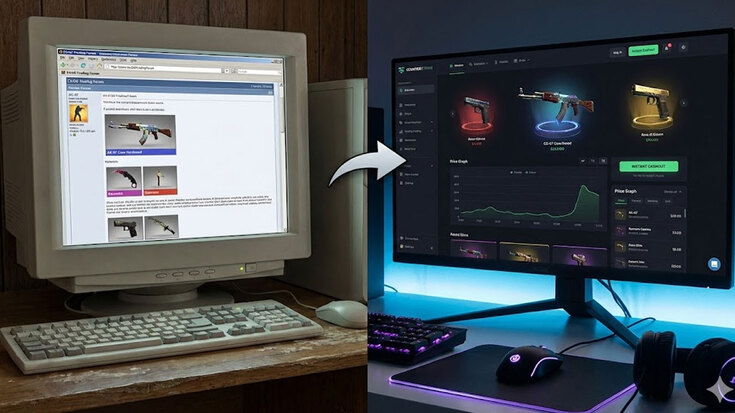
The development of CS trading is essentially a story of how a group of geeky forum traders became a billion-dollar industry with websites that provide fast cash-outs.
The Story Of CS2 Trading
Back in the early CS:GO days, namely 2013–2014, trading was super raw. People hung out on forums like Reddit’s r/GlobalOffensiveTrade or used Steam community groups. You’d post your inventory screenshots, list what you wanted, and then negotiate through Steam chat. It was slow, sketchy, and full of scams, middlemen were almost like priests, blessing trades so nobody got ripped off. Back then, the whole thing felt underground, like sneakerheads swapping pairs in parking lots.
Then came third-party trading sites. Around 2015–2016, these places popped up, letting people list skins for cash. That was huge, because Steam’s own market only allowed wallet funds and no real money out. These sites gave players a way to turn digital pixels into rent money. Valve hated it, dropped hammer bans, but the genie was already out of the bottle.
From there, the scene split into peer-to-peer markets that worked within Valve’s rules, and instant cash-out/betting sites, where you could sell a skin in seconds for real money, usually at a discount. The rise of case-opening sites and skin gambling also pushed demand for quick liquidity. People didn’t want to wait days to find a buyer, they wanted that money now and skin cash their inventory.
CS2(CS:GO) Trading Methods
Forums / Peer-to-Peer
You can sometimes land crazy good deals if you find someone who undervalues their skin, or you can negotiate 1:1 swaps without marketplace fees. Collectors and craft nerds still love this route for “grail” trades.
BUT they are slow as hell, full of trust issues, and scams are still around. Without middlemen or reputation systems, you’re taking risks. Basically only worth it if you’re deep into crafts or hunting patterns.
Steam Market
Totally safe, zero risk of scams. Super liquid for cheap skins, cases, and stickers. Perfect if you just want to flip your drops into wallet funds for more games.
BUT 15% cut every time, and you can’t cash out to real money. You’re locked in Steam’s walled garden. Great for hobbyists, terrible if you want actual profit.
Third-Party Marketplaces
Best mix of safety and pricing. They especially set the global standard for real market value, and platforms have buyer protection. You can sell for real money, usually 20–30% higher than instant-sell sites. Great for both buyers and sellers who don’t mind waiting.
BUT slower sales if you’re moving expensive items. Fees can still eat into profit, though way less than Steam.
Instant Cash-Out Sites
Speed. You can dump a $500 knife and get cash in your account within minutes. Perfect if you need liquidity fast or just don’t care about squeezing every dollar.
BUT a big haircut, you’ll often get 30–40% under market value. Also, it is riskier depending on the site’s legitimacy. Basically, you’re paying for speed with lost profit.
Case-Opening Sites
Entertainment factor, potential to flip small skins into big ones fast. Case battles, jackpot rooms, roulette, all hype.
BUT 99% of the time you lose value. It’s gambling, not trading. If your goal is building wealth or a stable inventory, this is the worst route long-term.
Conclusion
We may make some predictions about the future of CS2 trading based on the most recent developments and the rate of advancement. Mobile-first trading is one significant change for the future. Most likely, you’ll see complete marketplace applications that allow you to verify patterns, scan floats, and cash out right away from your phone.
More security and regulation is another perspective. To keep things clean, anticipate more anti-scam measures, more formal collaborations with third-party exchanges, and perhaps even “verified” trading hubs. The reliable markets will take precedence over the dubious gray websites.
We’ll also see a bigger push toward data-driven trading. Right now, pattern databases and float checkers are already a thing, but in the future, expect built-in valuation tools, portfolio trackers, and automated price alerts. Skins will feel even more like assets, tracked and charted like stocks.

Login to Geektown