
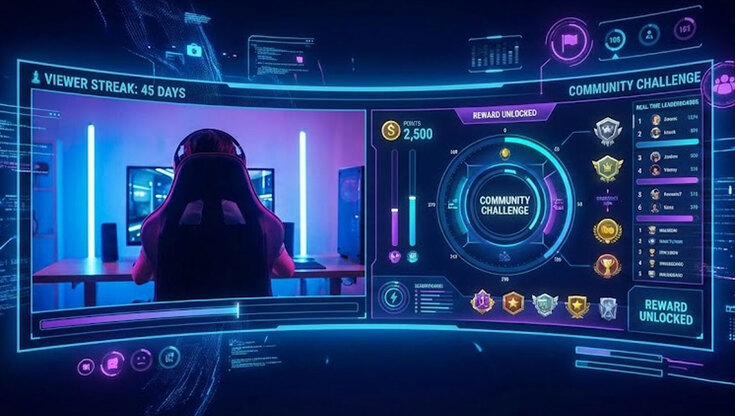
Streaming platforms have significantly evolved, shifting from traditional on-demand viewing to more interactive models. Among the most influential developments is gamified streaming, a trend that integrates game mechanics into the viewer experience. This approach isn’t just about adding entertainment value; it’s about influencing how people interact with content, how often they return, and how long they stay engaged.
The Influence of Gamification
Gamification is particularly visible in several UK casino games, where the line between watching and participating has become increasingly blurred. These platforms have adopted features such as points, challenges, and streak rewards to encourage consistent engagement. By turning viewing into a participatory act, users are no longer passive observers. They’re engaged in systems that acknowledge their activity, offering virtual rewards, progression indicators, and recognition within the platform.
The streaming ecosystem draws on systems already proven effective in other domains, implementing mechanics familiar to players, such as graded achievements or time-limited goals, to encourage consistent interaction. This model closely mirrors the approach used by fitness platforms like Zwift and Peloton, which employ structured rewards, such as digital races, performance tracking, and interactive leaderboards, to boost user participation. These strategies offer users measurable progression, transforming passive activity into a sense of ongoing involvement. Similarly, streaming services that incorporate trackable milestones, real-time feedback, and status indicators tend to appeal to viewers seeking more than standard viewing.
Behavioural Science Behind Viewer Interaction
The effectiveness of gamified streaming lies in its alignment with human psychology. Concepts such as variable rewards, where outcomes change unpredictably, are known to encourage repeated engagement. These are often used in game environments but can be found in streaming platforms as well, where surprises, recognition badges, or randomised rewards are employed.
The presence of goals such as completing a daily watch streak, unlocking milestones, or contributing to community-based challenges activates an internal drive to achieve and sustain progress. These mechanisms draw on well-established behavioural reinforcement loops, where the satisfaction of meeting small objectives encourages repetition. Over time, participation becomes habitual rather than incidental, reinforced by consistent feedback and perceived advancement. This self-reinforcing cycle is particularly effective in digital environments where visible progress, peer recognition, or time-sensitive targets further intensify user commitment. As a result, viewers are more likely to remain engaged for extended periods, returning not just for content, but for the continuity and recognition embedded in the interaction itself.
Audience Participation and Real-Time Features
Some platforms have gone further by enabling audiences to act as active contributors rather than passive viewers. Livestreaming services such as Twitch and YouTube Live have adopted features like audience polls, collaborative challenges, and interactive overlays that enable real-time influence over what unfolds on-screen.
These tools are designed to foster a participatory dynamic between content creators and their audiences. Twitch’s “Drops” system rewards users with in-game items for watching partnered streams linked to specific games, stimulating both attendance and duration of viewership. Additionally, Twitch Channels often employ Channel Points, which viewers can accumulate and spend on custom interactions such as triggering on-screen effects, voting in streamer-created polls, or influencing gameplay decisions.
YouTube has also tested gamified formats such as live trivia events, where viewers compete by answering timed questions, with leaderboards and potential digital prizes reinforcing engagement. These strategies reflect a growing shift toward interactive content models, where viewers are not just watching but actively participating in shaping the experience.
Infrastructure Supporting Interactivity
Delivering smooth, responsive, gamified streaming experiences depends on a well-integrated technological framework. Core components such as APIs, cloud-based processing, and real-time feedback systems work together to support platforms that are both stable and interactive. Elements like on-screen clickable features, synchronised audience participation, and live performance tracking rely heavily on this underlying infrastructure.
In parallel, third-party solutions have made it increasingly accessible for content creators to add interactive components to their streams. Whether through real-time voting tools, progression-based reward systems, or customised overlays, these technologies allow for a more flexible and engaging format, one that adapts to user input and supports deeper levels of participation.
New Ways to Measure Success
In traditional streaming, success was often measured by metrics such as watch time and unique viewers. But as gamified models become more widespread, the focus is shifting toward new forms of engagement. Data points such as streak-based participation, interactive session completion, and user-driven milestones are now seen as more meaningful indicators of audience involvement.
Advertisers and sponsors are adapting accordingly. Interactive metrics, such as the number of viewers who complete a challenge or engage with live polls, often hold greater value than passive views alone. As a result, both platforms and creators are increasingly prioritising the depth and quality of interaction, recognising that sustained engagement provides richer insights than audience volume by itself.

Login to Geektown