
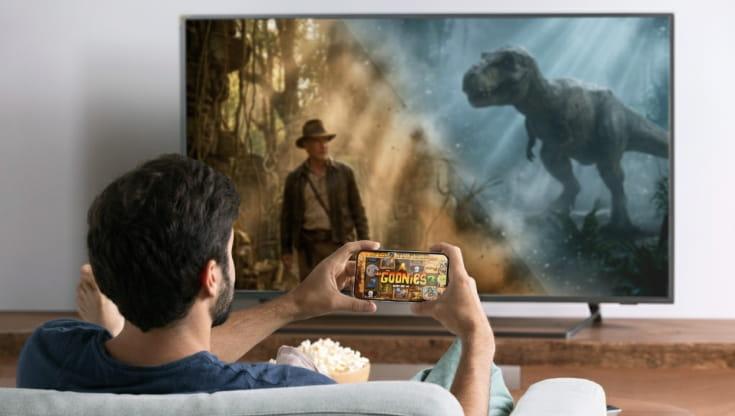
Bringing movies into digital gaming has been a significant shift in the global gaming market over the past twenty years. Film-themed games have pushed developers to move beyond simple symbols and create more complex stories that mirror the original movies. This trend started in the late 1990s, when developers noticed that people felt a strong connection to their favourite films, leading to lasting interest in games with familiar visuals and sounds.
Classic films like The Goonies, released in 1985, are valuable for licensing because people who saw them in theatres are now older adults, while the movies continue to gain new audiences through streaming. This mix of nostalgia and easy access gives developers a strong opportunity to use popular brands while offering advanced games. In the UK, the UKGC enforces strict rules on how branded games are presented, making sure nostalgia is used responsibly and does not mislead or target the wrong audience.
This article looks at how the sector has changed and its technical features. Note for players: both the demo and real-money versions can only be accessed at licensed UK online casinos. This overview is for informational purposes only. Independent UK-focused platforms such as UnionSlots.co.uk provide structured overviews of how licensed operators present film-themed slot titles within current regulatory and technical standards, helping contextualise how branded content fits into the wider digital gaming ecosystem.
The Psychological Impact of Cinematic Branding in Digital Leisure
Film-based games stand out because they use several psychological effects that developers have learned to use more effectively over time. Movie slot machine titles benefit from what psychologists call “schema activation,” where seeing or hearing something familiar triggers memories and emotions from the original film. This phenomenon is a cornerstone of modern cross-media adaptations, as seen in the development of cinematic slot analogues, illustrating how thematic consistency bridges the gap between the silver screen and digital interfaces. This happens almost instantly, making the thematic elements immediately recognisable to the user.
The deployment of iconic soundtracks is the most powerful recognition trigger because music engages memory systems through pathways that operate independently of conscious recall, allowing film-themed software to evoke emotional states associated with viewing the original film before users consciously identify the musical source. Character representation follows closely in importance because human faces and recognisable personas activate specialised neural processing regions evolved for social interaction, making character-based symbols inherently more engaging than abstract designs. The cultural impact of such titles is often highlighted in cinema’s best casino film retrospectives, which showcase how gambling themes have long been intertwined with elite storytelling.
Plot-driven milestones within bonus structures tap into narrative comprehension systems, transforming standard feature triggers into story beats carrying inherent dramatic weight because they reference moments audiences remember as significant within original film arcs. Themed software thus operates within a sophisticated ecosystem where emotional associations transfer across media formats, creating engagement patterns that purely original designs cannot replicate, regardless of technical sophistication or visual quality.
Case Study: The Goonies as a Benchmark for Thematic Design
Blueprint Gaming’s adaptation of Richard Donner’s 1985 adventure film set benchmarks for thematic integration that continue to influence how developers approach licensed properties across the industry. The original release, followed by subsequent iterations including The Goonies Return titles and various mechanical variations, demonstrates how a single intellectual property can sustain multiple products through careful differentiation of features while maintaining core thematic consistency. The technical success of Goonies-themed mechanics stems from Blueprint Gaming’s recognition that the source film’s narrative structure, centred on a quest for pirate treasure through challenges and revelations, maps naturally onto progressive feature systems where users advance through stages toward ultimate rewards.
Features like the Fratelli Hideout, Skeleton Organ, Super Sloth Free Spins, Goonies Go Wild, Inferno Free Spins, and One-Eyed Willy’s Treasure Bonus each refer to scenes from the film, adding both variety and a strong connection to the story. The first game used a five-reel, twenty-payline setup with a 96.00% RTP, which later games improved on instead of replacing. Character symbols like Mikey, Data, Mouth, Chunk, and Sloth have their own values and help tie the game’s numbers to familiar faces from the movie. Licensed UK operators apply age-verification and marketing controls to ensure such branding is not directed toward under-18 audiences.
The 2021 sequel, The Goonies Return, expanded the feature set from seven to twelve distinct mechanics while increasing the theoretical maximum win cap, while maintaining the same underlying probability model, demonstrating how franchised properties can evolve technically while maintaining brand coherence. Blueprint preserved the original grid structure rather than converting to Megaways mechanics, reflecting an understanding that existing audience expectations sometimes outweigh technical novelty. The integration of original film soundtrack elements and character voices creates audiovisual consistency, reinforcing the impression of encountering source material rather than derivative product.
Technical Integration and Visual Storytelling Standards
The transition from static interfaces to narrative-driven animation systems represents one of the most significant technical shifts in software development over the past decade, driven by hardware improvements that enable real-time rendering of cinematic-quality visual assets across diverse device categories. Modern film-inspired products routinely incorporate animated sequences that would have required dedicated rendering farms fifteen years ago, with contemporary GPU architectures enabling complex particle systems, dynamic lighting effects, and character animations maintaining smooth frame rates on mid-range mobile devices.
The shift extends beyond aesthetic improvement toward fundamental changes in how products communicate information, with animated transitions replacing static symbol reveals and bonus introductions unfolding through mini-cinematics, establishing narrative context before feature mechanics engage. High-fidelity graphics serve multiple functional purposes beyond visual appeal: detailed character representations enable more apparent symbol differentiation at smaller screen sizes, fluid animations provide feedback on mechanical states that text displays cannot convey efficiently, and visual consistency with source films reinforces the brand authenticity that licensing agreements require developers to maintain.
Security infrastructure has evolved alongside visual capabilities, with 256-bit encryption representing the standard protocol for data transmission between client applications and server backends.
Comparison of Interface Performance: Desktop vs Mobile
Comparative analysis of asset loading performance and GPU utilisation across hardware environments reveals important patterns influencing both development priorities and user experience outcomes. Desktop environments featuring dedicated GPUs with VRAM ranging from 4GB to 12GB enable developers to deploy uncompressed texture assets and complex shader programs without significant memory limitations, resulting in visual fidelity comparable to contemporary high-end game interfaces. Mobile devices operate under fundamentally different constraints, with integrated graphics sharing memory resources with the central processor and thermal throttling imposing limits on sustained GPU workloads.
Asset loading times on desktop configurations typically range from 1 to 3 seconds for the initial product launch, with subsequent feature triggers loading from cache within fractions of a second; on mobile configurations, loading times may range from 5 to 10 seconds, depending on network conditions and device capabilities. Developers address disparities through adaptive quality systems that detect hardware capabilities during initial loading and adjust texture resolution, animation frame rates, and particle complexity accordingly. HTML5 deployment has standardised cross-platform compatibility, eliminating plugin dependencies that once created installation barriers while enabling developers to leverage improved JavaScript engine performance. Contemporary film-licensed products achieve equivalent mechanical functionality across platforms while reserving visual enhancements for devices capable of rendering them without compromising frame rate or battery consumption.
Evolution of Intellectual Property (IP) Licenses in 2026
The legal framework governing licensed content in digital leisure formats has matured substantially since early experimental periods when licensing agreements often failed to anticipate specific requirements applicable to regulated gambling products. Major studios, including Warner Bros., Universal, and Paramount, now maintain dedicated licensing divisions with personnel who understand both commercial opportunities and regulatory constraints, enabling sophisticated contractual structures that address jurisdiction-specific requirements from the outset of negotiations. Lord of the Rings themed software demonstrates this evolution: initial IGT releases featuring Fellowship of the Ring content followed traditional licensing models, while subsequent iterations reflect the studio’s growing sophistication with regulated-market requirements for age verification and responsible messaging.
Jurassic Park digital formats, initially developed by Microgaming with 243 paylines and innovative features including T-Rex Alert Mode, established templates for how action-oriented film properties could translate dramatic tension into mechanical engagement, templates subsequent dinosaur-themed releases refined. Top Gun themed titles illustrate how properties with predominantly adult audiences face fewer licensing complications due to concerns about youthful appeal. The 2025 announcement that Aristocrat Gaming secured rights to develop MONOPOLY-themed products for worldwide land-based deployment demonstrates the studio’s continued interest in long-term partnerships with established developers. These agreements typically span multiple years, with provisions for sequels, format variations, and geographic expansion, creating stable planning horizons that justify significant development investments.
Navigating Genre Diversity: From Sci-Fi to Classic Drama
Genre adaptation breadth reflects both intellectual property diversity and the varying mechanical approaches developers employ, translating different narrative types into appropriate digital experiences. James Bond themed mechanics, developed primarily by Scientific Games and Microgaming, emphasise sophistication and high-stakes aesthetics, aligning with the franchise’s associations with luxury and danger, featuring visually rich interfaces with relatively straightforward mechanical systems that prioritise smooth operation.
The Godfather software titles translate the deliberate pacing and dramatic weight of Coppola’s crime saga into products where atmospheric presentation takes precedence over feature density, with bonus structures unfolding methodically. Star Trek digital iterations span multiple series and films, with developers including WMS and IGT creating distinct products for Original Series, Next Generation, and reboot film audiences, demonstrating how a single franchise can support parallel product lines targeting demographic segments with differing preferences. Batman Begins themed formats focus specifically on Christopher Nolan’s grounded aesthetic rather than the broader Batman universe.
| Feature | Classic Themed Slots | Modern Cinematic Slots |
| Visual Assets | Static symbol artwork adapted from promotional materials, limited animation confined to win celebrations, and background imagery from single scenes. | Dynamic rendered character models with multiple animation states, reactive environmental elements, and transitional cinematics linking mechanics to bonus features. |
| Audio Standards | Looped background music sampling soundtracks, standardised win effects unrelated to source material, and limited voice integration. | Full soundtrack implementation with dynamic mixing that responds to gameplay states, extensive voice acting, and environmental spatial audio. |
| Mechanical Alignment | Bonus structures are arbitrarily named after film elements, without any functional relationship to the narrative. | Feature mechanics are designed to mirror film narrative progression, bonus selection references character abilities, and multi-stage features recreate scene sequences. |
| Narrative Depth | Minimal story integration beyond thematic visual presentation. | Persistent narrative elements developing across sessions, character-specific abilities influencing mechanical outcomes, and progression structured around plot arcs. |
Regulatory Context and Licensing Transparency in the UK
The United Kingdom Gambling Commission maintains comprehensive standards governing how cinematic themes may be presented within licensed products, with particular attention to preventing presentations that appeal disproportionately to individuals below the legal gambling age. Nostalgic intellectual properties present specific regulatory considerations because emotional connections driving adult engagement may operate similarly for younger individuals encountering source material through streaming platforms or family viewing, creating potential for inappropriate appeal that operators must address.
UKGC standards require licensed products to undergo testing, ensuring advertised features function as described, theoretical return percentages stay within permitted ranges, and no presentation elements suggest outcomes are more controllable than mathematical reality permits. The September 2024 stake limits, which set a maximum of £5 per spin for users aged 25 and over and £2 per spin for users aged 18-24, apply to all products, including film-themed titles. The 2021 prohibition on rapid-play features applies equally to branded and original content, ensuring licensed properties cannot offer mechanical experiences unavailable elsewhere. Advertising restrictions prohibit content particularly appealing to minors, creating specific compliance obligations for products with youth-oriented source material. The statutory levy, implemented in April 2025 and ranging from 0.1% to 1.1% of gross gambling yield, depending on operator category, applies regardless of theme.
Market Projections: The Future of Film-Integrated Leisure
Market analysis indicates global valuations projected to expand from approximately USD 16.8 billion in 2024 to USD 28.3 billion by 2034, reflecting compound annual growth rates of 5.6% to 6.2% across analytical methodologies. Film-themed products represent a growing share of new releases, with industry reports indicating that over 57% of manufacturers launch products based on movie franchises, sports icons, and cultural narratives. Planet of the Apes software exemplifies how science fiction properties with established fan bases continue to attract developer interest decades after theatrical release, with Terminator 2’s digital designs and emotional attachments formed during earlier viewings providing a foundation for contemporary engagement. UK regulation requires that market growth does not compromise player protection or responsible gambling safeguards.
Dark Knight themed iterations demonstrate that properties generating multiple successful adaptations offer developers flexibility in choosing which interpretation to license. Augmented reality integration represents the most significant near-term development, with AR-driven applications enabling the overlay of digital elements onto physical casino environments, potentially transforming physical spaces into themed experiences. According to industry analysis, approximately 44% of newly released machines support augmented reality features, indicating substantial current investment rather than speculative future development. Mobile gaming continues to drive accessibility improvements, with around 38% of manufacturers offering mobile synchronisation capabilities enabling cross-platform continuity.
Conclusion
Bringing together movie brands and digital games has created a complex market where new technology supports well-known brands, and rules protect players without taking away the fun. The move from simple branding to real storytelling in games shows that developers are getting better at leveraging licensed properties to create more engaging digital experiences. Games like The Goonies show how a movie’s story can shape the way a game is designed. Technical infrastructure developments have democratised high-fidelity visual presentation across device categories, enabling film-quality graphical experiences on hardware that struggled with basic animations just a few years ago.

Login to Geektown