
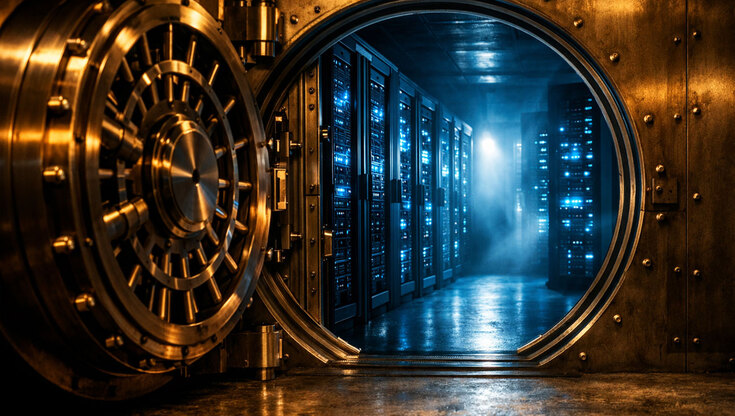
For decades, the heist film has been a staple of cinema, relying on a familiar and thrilling formula. We all know the beats: the charismatic leader assembles a crew of specialists, they procure blueprints to a physical location, and they execute a complex plan to bypass guards and lasers. The climax almost always involves drilling into a massive steel vault, stuffing duffel bags with unmarked bills, and speeding away in a nondescript van before the police arrive.
The rise of digital infrastructure has made the “clean getaway” virtually impossible to script without suspending disbelief to a breaking point. Because payment gateways for everything from high-street retail to the best credit card casinos leave digital footprints, the cinematic ‘clean getaway’ is now a myth. How do you write a robbery when there is nothing physical left to steal?
The shift towards a cashless society has fundamentally altered the landscape of crime, both in reality and in fiction. Where audiences once accepted that a bank branch might hold millions in cash, the reality of modern banking makes such a premise laughable. The tension of a heist movie evaporates when the audience realises that the “loot” is just data on a server, protected not by steel doors, but by encryption keys and two-factor authentication.
In the classic films of the 20th century, the objective was almost always cash, gold, or diamonds: tangible assets that could be physically moved and spent without immediate detection. Today, if a screenwriter were to pitch a story about robbing a high-street bank in 2026, the audience would immediately spot the flaw: the money simply isn’t there anymore.
Recent data indicates that cash payments have plummeted to just 9% of total transactions, with the vast majority of money moving digitally. A crew breaking into a modern bank would likely find little more than petty cash drawers and frustrated employees.
If physical cash is off the table, the logical pivot for a modern heist movie is digital theft. However, this introduces a new narrative problem: the absolute traceability of modern finance. In older films, money could be “wired” to an offshore account and vanish into the ether. In 2026, the global financial system is so interconnected that moving large sums of money anonymously is nearly impossible.
Reports show that 40% of UK adults now hold digital-only bank accounts, a massive shift that reflects how deeply integrated technology is in personal finance. This means that the financial ecosystem is designed to flag anomalies instantly. A sudden transfer of millions is a red flag that triggers automated freezes and investigations before the “robbers” can even close their laptops.
Moreover, the rise of Open Banking has created a transparent financial web. With millions of active users sharing data between providers, the financial identity of an individual is cross-referenced and verified in real-time. You cannot write a scene where a character walks into a bank with a fake ID and opens an account to stash stolen funds. The systems verify identity against government databases and biometric data instantly.
To compensate for the lack of physical action, modern thrillers often attempt to replace the safecracker with the hacker. On paper, this makes sense; if the money is digital, the thief must be digital. However, visually and dramatically, this substitution fails to capture the audience’s imagination in the same way. Watching a character type furiously on a keyboard while a progress bar loads lacks the visceral, tactile tension of a tumbler clicking into place or a stethoscope pressed against a vault door.
Real-world “heists” usually involve phishing emails, social engineering, or waiting months for a software vulnerability to be exploited. Furthermore, security measures have evolved beyond passwords. With 88% of adults using remote banking, institutions have deployed artificial intelligence to monitor behaviour patterns.
This technological shift forces writers to invent increasingly unrealistic “magical” hacking devices to keep the plot moving. We see characters plug a USB drive into a thermostat to shut down a building’s power grid, a scenario that pulls the audience out of the grounded reality the genre relies on. The grounded grit of The French Connection or Heat is lost when the mechanism of the crime feels like science fiction rather than a display of skill.
We are likely to see a bifurcation in storytelling. On one side, we will see a resurgence of period pieces – films set in the 1970s, 80s, or 90s, where cash was king and the internet was non-existent. These settings allow writers to use the classic tropes without fighting against the reality of modern surveillance.
On the other side, contemporary thrillers will have to abandon the “robbery” aspect entirely and focus on the human element of manipulation. Stories will likely shift toward high-stakes social engineering, confidence tricks, and corporate espionage, where the goal is information rather than currency. The era of the mask and the shotgun is over; the future of the heist film lies in the psychological manipulation of the people behind the screens.

Login to Geektown