
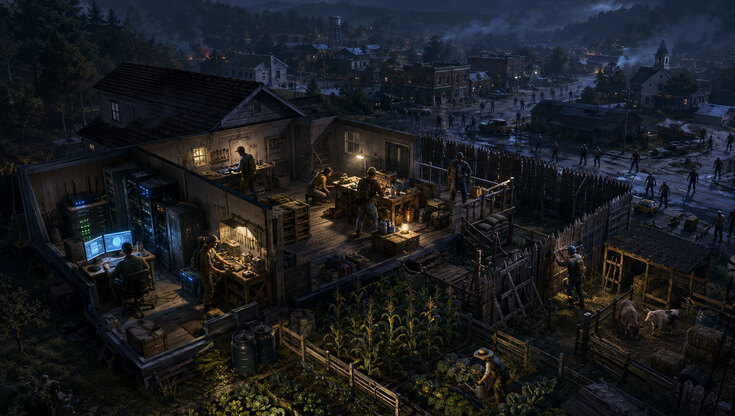
Project Zomboid has been in Early Access since 2013, and on 29 July it had its biggest week yet. Build 42, the update the community had been testing on and off for nineteen months, became the game’s new default version, and the result was the highest concurrent Steam player count the game has ever recorded. For a thirteen-year-old survival sim with no marketing budget to speak of, that’s a genuinely unusual spike, and it’s pulled a lot of new and returning players into setting up a server for the first time.
This guide covers what actually changed, what it means if you’re already running a server, and where UK players can actually find decent hosting, whether that’s for Zomboid specifically or gaming in general.
What Build 42 Changed
Build 42, officially version 42.20, rebuilds a large part of the game’s Knox County map, adds proper farming and animal husbandry, and reworks how crafting and building work. It’s the most substantial systems update the game has had since multiplayer itself arrived in Build 41.
The part that matters most for anyone hosting a server is what didn’t carry over. Build 41 and Build 42 use completely different save formats, and there is no official tool to convert one into the other. A server that’s been running since Build 41 launched does not open in Build 42. The world isn’t deleted, but it is inaccessible unless the server stays on the older version.
The Indie Stone anticipated this and added a “legacy41” branch on Steam specifically so existing communities can keep playing their old save if they’re not ready to move. Every player connecting to a legacy41 server needs to select that same branch themselves, or they’ll hit a version mismatch trying to join.
There’s also a smaller technical change worth knowing about if the server runs mods. Build 42 requires a backslash before every mod ID in the server configuration, a syntax change that didn’t exist in Build 41 and has been a common cause of mods silently failing to load after an upgrade. SteamCMD will also install a Build 41-only mod onto a Build 42 server without any warning that it’s the wrong version, which can leave a server owner debugging a problem with no obvious cause.
Setting Up Fresh: What to Actually Check
Because old saves can’t transfer, a meaningful number of players are setting up a completely new Build 42 server rather than migrating an existing one. If that’s the situation, it’s worth treating it as a genuine decision rather than just renting from whichever provider is first in a search result.
A few things are worth checking specifically:
RAM. Build 42’s larger map and deeper simulation systems push memory requirements higher than Build 41 needed at the same player count. A plan sized for the old build may not be enough for the new one, particularly once mods are involved.
Branch support. Not every host makes it equally easy to switch a server between the default branch and legacy41. If keeping the option open matters to your group, it’s worth confirming before committing to a plan.
Location. Server location affects latency more than almost anything else for a game like this, where timing during a horde encounter genuinely matters. A UK-based group hosting on a server three time zones away will feel it, no matter how good the hardware is on paper.
Finding Decent Hosting in the UK Generally
That last point is worth expanding on, because it applies well beyond just Zomboid. UK players setting up any kind of game server, whether that’s this, Minecraft, Rust, or something else entirely, run into the same basic problem: most “best hosting” lists online are really just affiliate rankings dressed up as advice, with little consistency in how providers are actually compared.
A properly built comparison should be checking the same things every time: confirmed UK node location rather than a vague “EU” label that could mean anywhere from London to Bucharest, actual hardware specs rather than marketing language, real Trustpilot volume rather than a handful of cherry-picked reviews, and pricing shown honestly in GBP rather than converted USD that quietly shifts with exchange rates.
For anyone at the stage of actually comparing options, gameserverhosting.co.uk runs exactly that kind of comparison, tracking around two dozen UK-relevant providers against hardware, price, and verified reviews, with dedicated breakdowns per game rather than one generic list trying to cover everything at once. The Project Zomboid specific comparison is worth a look if that’s what brought you here, and it’s already been picked up elsewhere in the UK press as a genuinely useful filtering tool for narrowing down hosts by game and location.
The Bigger Picture
What makes the Build 42 update notable isn’t really the mechanics themselves, it’s the scale of the response to a game that’s been in Early Access for over a decade getting a substantial technical overhaul instead of another cosmetic refresh. The Indie Stone have said they’re not rushing Build 43, the update expected to introduce human NPCs, and given how long Build 42 took to reach this point, that patience looks like the right call rather than a delay to worry about.
For server owners, the practical takeaway is straightforward: back up before touching anything, decide deliberately whether to move to 42 or stay on legacy41, and if you’re starting fresh anyway, take the chance to actually compare hosting properly rather than defaulting to whatever was used last time.

Login to Geektown