
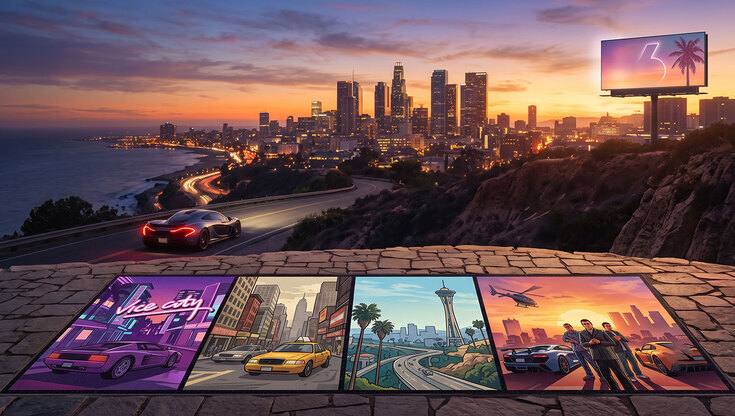
The gaming world is making more and more progress with each passing day. Open-world titles like Red Dead Redemption 2 and The Legend of Zelda: Breath of the Wild have completely reshaped what players expect from a video game. These are experiences that feel alive, worlds where the environment reacts, stories unfold organically, and every corner hides something worth discovering.
At the same time, entirely new gaming genres have broken through to mainstream audiences. Casino gaming is one of the clearest examples of this. Thanks to casino streamers who have brought casino games closer to the general public, and to platforms that have made them more accessible than ever, this genre has been in constant growth. It is a space that barely existed as a mainstream entertainment category a decade ago, yet now commands a massive and loyal audience.
But despite all this change, some franchises refuse to fade. Certain games embed themselves so deeply into culture that they remain relevant regardless of what else is happening around them. Grand Theft Auto is that kind of franchise. With GTA 6 on the horizon and anticipation running at an all-time high, there has never been a better moment to look back and understand why this series has mattered so much and why it still does.
A Franchise That Rewrote the Rules of Open-World Design
When Grand Theft Auto III launched in 2001, it did not just release a new game; it introduced a template that the entire industry spent the next two decades trying to replicate. A fully three-dimensional city you could explore freely, missions you could tackle at your own pace, and a level of interactivity with the world around you that felt genuinely unprecedented. Before GTA III, open-world design existed in various forms, but nothing had packaged it in a way that felt so complete and so cinematic.
GTA: Vice City and GTA: San Andreas built on that foundation with remarkable speed. Vice City gave players a sun-soaked, neon-lit world dripping in 1980s atmosphere.
San Andreas then expanded the scope dramatically, offering multiple cities, a huge rural landscape, and a story that tackled race, corruption, and loyalty with more ambition than most games had ever attempted. These were not just fun games; they were cultural moments. Players talked about them at school, quoted them at work, and referenced them in ways that only the most impactful entertainment properties ever achieve.
GTA IV and the Shift Toward Serious Storytelling
GTA IV marked a turning point in tone. Niko Bellic’s story was darker, more grounded, and far more emotionally complicated than anything the series had attempted before. Liberty City felt gritty and real. The game leaned into themes of immigration, disillusionment, and the hollow promise of the American dream in a way that surprised even long-time fans. It was a bold creative decision, and it paid off.
The writing throughout GTA IV had a confidence and maturity that drew genuine comparisons to prestige television drama. Rockstar was no longer simply making a fun sandbox; they were crafting a narrative experience that stood alongside serious storytelling in any medium.
GTA V and Online: A Phenomenon That Never Ended
GTA V launched in 2013 and became one of the best-selling entertainment products in history, across any medium. The three-protagonist structure was a genuine structural innovation, allowing the narrative to shift perspectives in ways that kept the story constantly engaging. Los Santos was enormous, detailed, and packed with activity. The satire of modern American culture was sharper and funnier than ever, targeting social media, reality television, corporate greed, and financial fraud with equal enthusiasm.
Then GTA Online launched, and the game took on an entirely different life. What started as a multiplayer extension grew into a persistent, ever-evolving world that Rockstar continued to expand for over a decade.
Heists, businesses, luxury properties, and an economy built around player ambition kept millions coming back consistently. The fact that GTA V has been re-released across three console generations and continues to sell is not a marketing trick; it reflects genuine, sustained demand from players who find the experience worth returning to.
GTA Online also demonstrated something important about what modern players want. They want depth, progression, and social interaction built into a world that feels worth inhabiting. It predicted the direction the wider gaming industry would move toward, years before live-service games became the dominant model.
The Cultural Footprint That Goes Beyond Gaming
Few franchises have crossed into mainstream culture the way GTA has. Politicians have cited it in debates about media influence. Musicians have referenced it in lyrics. Films and television shows have borrowed its visual language.
The brand recognition is remarkable; even people who have never played a GTA game know roughly what it is and what it represents. That kind of cultural penetration is extraordinarily rare for a video game franchise.
Part of what makes GTA so sticky is the freedom it offers. Players remember specific moments they created themselves: the spontaneous chaos, the absurd sequences, the times the game’s systems collided in unexpected ways. Those personal stories are what people share and what keep the franchise alive in conversation long after a game’s release.
Why GTA 6 Carries So Much Weight
The announcement trailer for GTA 6 broke YouTube viewing records within hours. That reaction says everything about the pressure Rockstar is carrying into this release. Expectations are astronomical, and the gaming community is watching every detail.
Whether GTA 6 lives up to that expectation remains to be seen. But the weight of anticipation itself is a testament to what Rockstar has built over the past twenty-five years.
Very few franchises earn that level of collective investment. The Grand Theft Auto series has shaped how developers think about open worlds, how stories get told in games, and how a single franchise can anchor an entire medium’s cultural conversation. Whatever comes next, that legacy is already secure.

Login to Geektown