
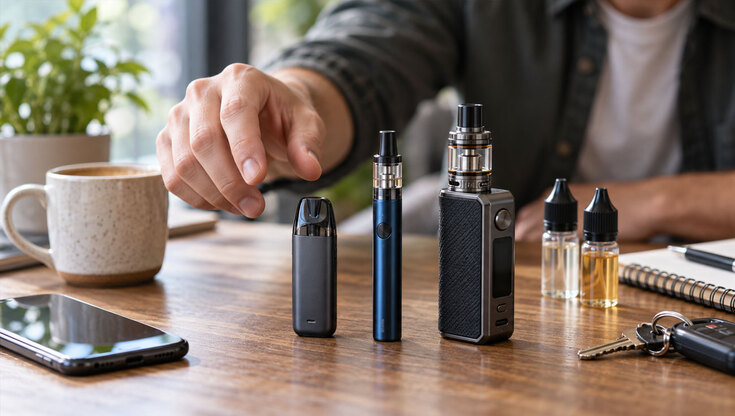
Choosing a vape kit can feel like comparing smartphones: battery capacity, wattage, coil resistance, airflow, pod size, and a long list of technical features all compete for attention. Yet the device with the most impressive specifications is not necessarily the one that will work best for you. The better question is much simpler: how do you actually vape? Your habits, priorities, experience level, and reason for vaping should shape your choice far more than a specification sheet.
For adult smokers using vaping as a way to move away from cigarettes, this practical approach is especially important. A suitable kit should make your routine easier, provide an appropriate nicotine experience, and avoid unnecessary complexity. Instead of chasing the latest technology, focus on finding a device that fits naturally into the way you already live and vape. When the device complements your habits rather than working against them, you are far more likely to find the experience convenient, consistent, and satisfying.
Start With Your Everyday Vaping Routine
The first step is to consider when and where you vape. Someone who takes occasional puffs throughout the day has very different requirements from someone who reaches for their device regularly to manage nicotine cravings. If your vape spends most of the day in your pocket or bag, a compact pod system may make more sense than a large, heavy device with numerous adjustable settings. Portability, simplicity, and ease of use can matter more than maximum power.
Your routine also determines how important battery capacity is. If you spend most of your day near a charger, an extremely large battery may offer little practical advantage. On the other hand, people who commute, work long shifts, or spend significant periods away from a power source may appreciate a device that can comfortably last through the day. The goal is not necessarily to buy the biggest battery available, but to choose enough capacity to avoid constantly thinking about charging.
Think about how much maintenance you are realistically willing to do, too. Some experienced vapers enjoy changing coils, adjusting airflow and experimenting with power settings. Others simply want to fill a pod, charge the device and get on with their day. Neither approach is inherently better. The right kit is the one whose maintenance requirements match your willingness to deal with them.
Match the Device Type to Your Experience Level
Vape kits generally fall into a few broad categories, and understanding their practical differences is more useful than memorising specifications. Pod systems tend to be compact and straightforward, making them appealing to people who value convenience. Vape pens provide a middle ground, often offering a familiar shape while retaining rechargeable and refillable features. More advanced vape mods can provide extensive control over power and airflow, but that flexibility comes with greater responsibility and a steeper learning curve.
For a new or relatively inexperienced adult vaper, simplicity can be a genuine advantage. A device that requires frequent adjustments may become frustrating if you are primarily interested in replacing cigarettes rather than exploring vaping technology. A straightforward pod system can eliminate much of that learning curve, allowing you to focus on finding a comfortable nicotine strength and draw style rather than learning complicated settings.
Experienced users may have different priorities. If you already understand coil types, wattage, and airflow, adjustable settings can allow you to fine-tune the experience. However, more control does not automatically mean a better vaping experience. If you consistently use the same settings, a simpler device that delivers the experience you prefer may ultimately be more convenient.
Think About How You Prefer to Inhale
Your preferred inhalation style is another important factor that specifications alone cannot explain. Many people who transition from smoking prefer a mouth-to-lung style that feels relatively similar to drawing on a cigarette. Others prefer a more open draw and greater vapour production. These preferences can influence which type of device, coil and airflow configuration feels comfortable.
If you are moving away from cigarettes, recreating some of the familiar physical habits can be helpful. The hand-to-mouth movement, draw resistance and throat sensation can all influence whether a new device feels natural. This is why a compact pod or pen can sometimes be more appropriate for a new vaper than a powerful, cloud-focused device. A kit does not need to produce enormous vapour clouds to provide a satisfying experience.
Airflow deserves attention because it changes the character of the draw. A tighter airflow generally produces a more restricted inhale, while a more open airflow can create a looser draw and potentially more vapour. Rather than assuming one setting is superior, consider what feels natural to you. If you are constantly adjusting the airflow because the device does not suit your preferred draw, that is a sign that the underlying kit may not be the right match.
Choose Nicotine Strength Around Your Actual Needs
Nicotine strength should be considered separately from device specifications. A powerful device paired with an unsuitable nicotine level can produce an unpleasant experience, while an otherwise simple kit can work well when the nicotine level is appropriate for the individual.
For adults switching from cigarettes, nicotine strength should generally reflect your previous smoking habits and how frequently you experience cravings. The objective is not simply to select the highest available strength. It is to find a level that helps manage cravings without making the experience unnecessarily harsh or uncomfortable.
It is also worth remembering that vaping behaviour does not necessarily mirror smoking behaviour. Someone might take more frequent, shorter vaping sessions than they previously smoked cigarettes. That does not automatically mean the device is failing. The way nicotine is delivered through vaping differs from traditional smoking, so your routine may naturally change after switching.
Consider Refillable Versus Replaceable Systems
Convenience and ongoing maintenance should play a major role in your decision. Refillable pod systems generally require you to purchase e-liquid separately and replace pods or coils as necessary. This creates a little more involvement but also gives you greater control over flavours and nicotine strength.
Replaceable components can also make a device more adaptable to changing preferences. Instead of replacing the entire kit when performance declines, you may simply need a new pod or coil, depending on the design. Before buying, check what consumables the device requires and whether they are readily available from reputable retailers.
The difference between sealed and refillable systems is largely about convenience versus flexibility. A sealed pod system can be extremely simple because there is little maintenance involved. A refillable system requires more attention but can provide greater choice and potentially better value for regular users. Consider which option you are genuinely prepared to maintain rather than choosing based on assumptions about what experienced vapers use.
Ignore Features You Will Never Use
One of the easiest ways to overspend on a vape kit is to pay for features that sound impressive but have no relevance to your routine. Touchscreens, extensive wattage ranges, multiple power modes and highly customisable settings may be valuable to enthusiasts, but they are unnecessary for someone who simply wants a dependable everyday device.
Instead, identify the features you will actually use. Do you need adjustable airflow? Is a removable battery important? Would USB-C charging make your routine easier? Do you want refillable pods or a tank? How often are you prepared to replace coils? These questions tell you much more about suitability than a long specification list.
This is where browsing comparisons such as the best vape kits UK can be useful, provided you use them as a starting point rather than treating rankings as universal recommendations. A “best” kit for an experienced hobbyist may be completely unsuitable for someone who wants a discreet, uncomplicated device for transitioning away from cigarettes. Look at recommendations through the lens of your own routine rather than assuming the highest-rated or most expensive product is automatically the right choice.
Make Safety and Reliability Part of the Decision
A vape kit should not be judged only by performance. Construction quality, charging practices, replacement parts, and retailer reputation all matter. Avoid damaged devices, follow the manufacturer’s charging instructions and use the correct charger. A reliable kit should feel solid, charge consistently and have replacement components that are easy to identify.
E-liquid also deserves responsible handling. Nicotine-containing liquids should be stored safely and kept away from children and pets. Check product labels carefully and purchase from reputable retailers so you know what you are buying. Clear labelling and dependable product information are particularly important when selecting nicotine-containing products.
Most importantly, vaping should be considered in the appropriate context. For adults who smoke, switching completely from cigarettes to vaping can reduce exposure to many harmful substances associated with tobacco combustion, but vaping itself is not harmless. Non-smokers and young people should not start vaping, and anyone using vaping specifically to quit smoking should focus on moving away from cigarettes rather than treating vaping as an entirely risk-free lifestyle product.
Let Your Habits Make the Final Decision
Ultimately, choosing a vape kit becomes much easier when you stop trying to find the device with the longest feature list and start looking for the one that fits your behaviour. A commuter may prioritise battery life and portability. A beginner may need simplicity and an easy mouth-to-lung draw. An experienced user may value adjustable airflow and power control. Someone focused on reducing cigarette cravings may care most about reliable nicotine delivery and a familiar vaping experience.
The best choice is therefore personal, but that does not mean it has to be complicated. Start with your daily routine, identify the kind of draw you prefer, consider how much maintenance you will tolerate, and choose nicotine strength according to your actual needs. Then look at specifications to confirm that a device meets those requirements rather than allowing specifications to determine your requirements.
Conclusion
The best vape kit is not necessarily the most powerful, expensive, or technically advanced model on the market. It is the one that fits comfortably into your everyday routine. Battery capacity, wattage, coil resistance, airflow and pod design all have their place, but these specifications only matter when they solve a problem you actually have. A compact device may be ideal for someone who values portability, while another user may benefit from greater battery capacity, adjustable airflow or more control over performance
Before buying, think honestly about how you vape. Consider how frequently you use your device, where you carry it, how much maintenance you are willing to handle, what type of draw you prefer, and what nicotine strength suits your needs. Then compare devices based on those priorities. This approach can prevent you from spending money on unnecessary features while helping you find a kit that feels natural to use.

Login to Geektown