
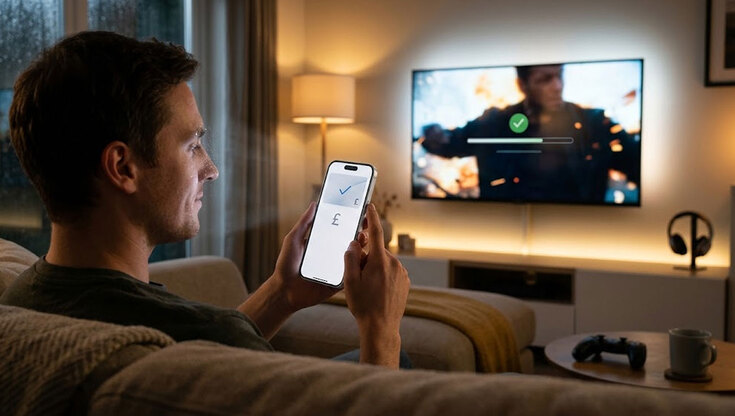
A new episode drops, the free trial has run out, and the only thing standing between you and the cold open is a double-click of the side button. Most of us don’t think twice about it anymore. According to UK Finance’s latest payments data, published in August, 65% of UK adults were registered for at least one mobile payment service in 2025, up from 57% a year earlier.
From the sofa to the checkout in one press
Streaming is where the habit took root. Ofcom’s Media Nations 2026 report puts subscription streaming in 70% of UK homes, a figure that has barely moved in four years. The market has stopped growing. What changed is how we pay for it.
Signing up for Apple TV+, adding a Disney+ tier or grabbing a season pass inside a game now happens in the same few seconds. Face ID, a glance, a tick. Nobody types a 16-digit number on a remote anymore, and nobody hunts for a card down the side of the sofa either.
Apple Pay has been in the UK since July 2015, but for years it was mostly a coffee-shop trick. It became an entertainment tool once apps, games and streaming services started treating the Wallet card as the normal way to pay.
Where the casino app fits in
The same reflex now turns up somewhere you might not expect: licensed online casino apps. For an adult who already pays for TV, music and games with a double-click, it feels natural to fund a few spins on the same device, in the same way.
There is one twist. UK-licensed gambling sites have been barred from taking credit card payments since 14 April 2020, so the card sitting behind Apple Pay has to be a debit card. Put a credit card in the Wallet and a UKGC-licensed casino will simply decline it.
Paying in works the same everywhere, but getting money back out does not. Some licensed sites return Apple Pay withdrawals instantly, others take one to three working days, and minimum withdrawals run anywhere from £5 to £20, so it pays to look at how withdrawal times differ from site to site before treating any of them like another subscription. Reading a site’s payment terms before the first deposit takes half a minute and saves a lot of refreshing later.
The subscriptions you forget you have
One-tap payment has a downside that every streaming fan knows. When signing up takes a second, cancelling tends to slip down the to-do list. Trials roll into paid months, and a service you opened once for a single series is still billing you in spring.
The bundles don’t always help. When Sky folded Netflix, Disney+, HBO Max and Hayu into one subscription, it cut the number of bills, but it is easy to leave an old standalone plan running alongside it by accident.
Gifting has its own quirks too. Not every platform takes the same vouchers, which is why the guide to which streaming services accept UK gift cards ended up longer than anyone expected.
A generation that never reaches for a wallet
The shift is sharpest by age. UK Finance found that 89% of 25 to 34-year-olds are registered for mobile payments, against 29% of over-65s. For younger viewers, the phone is the wallet, and a physical card is the backup that lives in a drawer.
That matters for how entertainment gets sold. A service that makes you type card details is now the odd one out, and the friction that used to make you pause before a purchase has more or less gone.
Making the habit work for you
None of this is a reason to go back to cash. The iPhone gives you more control than a plastic card ever did, as long as you use it. Everything billed through your Apple Account sits in one list under Settings, then your name, then Subscriptions, and Apple’s own walkthrough on cancelling a subscription from your iPhone takes about a minute to follow. A five-minute check every few months tends to pay for itself.
Family Sharing’s Ask to Buy lets a parent approve every purchase a child makes, and many UK banking apps can now freeze a card or block gambling transactions with a toggle. Casino apps work on the same principle. UK-licensed sites let adults set deposit limits from the account menu, GAMSTOP blocks every licensed operator at once for anyone who wants a break, and BeGambleAware offers free, confidential support. Gambling is for over-18s only.
The double-click is here to stay. The trick is to put back, on purpose, the pause the card number used to give you.

Login to Geektown