
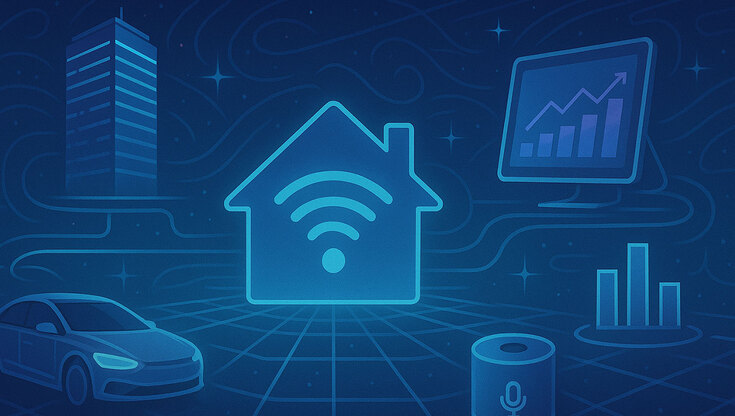
The Internet of Things (IoT) has matured into one of the most influential technologies shaping modern life in 2025. It’s no longer limited to smart lightbulbs or wearable fitness trackers – it now plays a central role in how homes are managed, how vehicles interact with infrastructure, and how companies monitor resources and workflows. Just as non-UK casinos offer digital experiences tailored to specific user needs, IoT applications are all about customization, automation, and real-time feedback.
From smart thermostats that reduce energy bills to AI-driven traffic lights easing congestion, IoT’s reach has expanded across both public and private sectors, making it a quiet force behind much of today’s convenience and efficiency.
Smart Homes: From Convenience to Control
Smart homes have evolved well beyond remote-controlled gadgets. In 2025, entire living environments are now responsive to resident preferences, learned behaviors, and environmental conditions. IoT systems coordinate lighting, heating, security, and appliance use based on context – whether someone is working from home, away on holiday, or simply moving from room to room.
Here’s how smart home IoT setups typically function:
| Feature | Role in Home Management |
| Smart Thermostats | Adjust temperatures based on occupancy and weather data |
| Voice Assistants | Central control for all connected devices |
| Smart Locks & Cameras | Real-time access monitoring and remote locking capabilities |
| Energy Monitoring Tools | Track appliance usage and optimize consumption patterns |
What sets today’s smart homes apart is how systems coordinate across multiple platforms. For instance, if motion sensors detect no activity, thermostats lower heating, lights turn off, and security systems activate – automatically reducing waste while increasing safety.
IoT and the Transportation Shift
Transportation has become a major frontier for IoT innovation. In 2025, the technology plays a vital role in optimizing road usage, reducing emissions, and supporting autonomous vehicle development. Sensors embedded in roads, traffic signals, and public transport vehicles feed real-time data to central systems that adjust operations dynamically.
Cities now rely on connected transport ecosystems that include:
- Smart traffic management systems that adjust light patterns based on vehicle flow
- Vehicle-to-Infrastructure (V2I) communication enabling cars to “talk” to roads
- IoT-enabled electric vehicle charging stations that predict and manage grid demand
- Public transport apps that update routes live based on crowd density or traffic changes
Fleet managers also benefit from IoT integration. Logistics companies use real-time GPS data and sensor feedback to monitor driver behavior, vehicle maintenance needs, and cargo status – making route optimization and cost reduction part of daily operations.
The outcome is a transportation network that’s safer, more responsive, and significantly more efficient than systems of the past.
Businesses and the Connected Workplace
For businesses, IoT has redefined how resources are monitored, environments are controlled, and assets are protected. From retail to manufacturing, connected devices provide real-time insights that help improve operations and reduce downtime. Even office environments have changed, with smart building systems adjusting lighting and ventilation based on occupancy.
IoT in the business context typically supports:
- Predictive maintenance: Machines alert technicians before breakdowns occur
- Inventory tracking: Real-time shelf or warehouse monitoring prevents overstock or shortages
- Workspace optimization: Desks, meeting rooms, and energy use adapt to staffing levels
- Environmental monitoring: Factories or labs track temperature, humidity, or hazardous leaks
Companies can now make data-driven decisions faster, without waiting for manual reports or audits. The added visibility also contributes to improved compliance and security, especially in industries with strict regulatory requirements.
Challenges Behind the Growth
Despite its momentum, IoT is not without complications. One of the most discussed concerns in 2025 is data security. With every connected sensor comes the risk of unauthorized access, and companies have had to prioritize cybersecurity at every level. Privacy, too, remains a hot topic, especially when IoT devices gather behavioral data inside private homes or vehicles.
Cost is another factor. While large corporations and governments can afford integrated systems, small businesses and homeowners still face barriers to entry when it comes to high-quality devices or installation services.
Even with these challenges, the momentum is unmistakable. The continued refinement of low-power chips, edge computing, and 5G networks is making IoT more accessible and less resource-intensive by the year.
What’s Next for IoT in 2025 and Beyond
As more sectors adopt IoT frameworks, the focus is shifting from simple automation to predictive intelligence. Systems are expected not just to respond, but to anticipate needs based on trends and historical data. Whether it’s a refrigerator ordering milk, a city rerouting buses due to weather, or a factory preventing equipment failure before it happens, IoT is redefining what it means to manage environments efficiently.
While the full potential of IoT is still unfolding, its current applications already demonstrate its value across nearly every corner of modern life. For individuals, it’s about convenience and control. For cities and businesses, it’s about efficiency and adaptability. And for the future, it’s about building systems that think, react, and improve – before we even ask.

Login to Geektown