
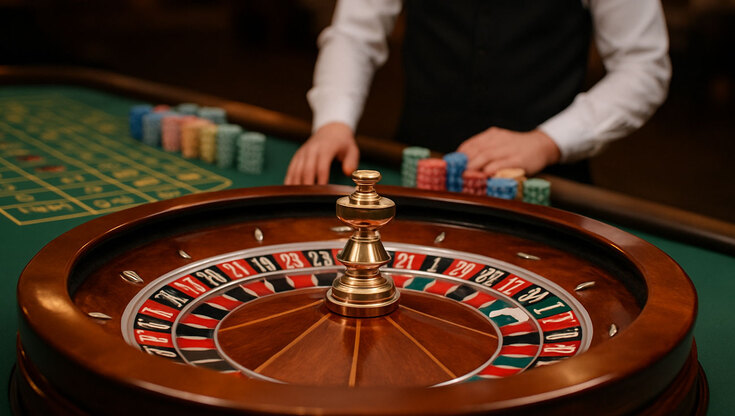
To say roulette has been spinning for centuries wouldn’t be an exaggeration. First devised in France sometime in the 18th century, the game evolved and branched off into various styles. By the 19th century, roulette was one of the most popular casino games all over Europe and the US. Even in our current era, in which hundreds of games are released every month and new fads die out in seconds, this simple red-and-black wheel hasn’t lost its appeal.
Each spin stirs up a tornado of emotions, whether anticipation, hope, uncertainty or a little bit of everything at once. Players are naturally hooked by possibility, the pull of ‘almost’ and the dopamine hit that comes with the territory. Beyond the solo experience, roulette has also become a cultural touchpoint, a symbol of the casino floor, a representation of risk and glamour and the embodiment of suspense that keeps us coming back.
The Thrill of Uncertainty
Roulette and many other luck-heavy casino games are built on the thrill of the unknown. Humans are built to respond to uncertainty, and this game knows how to leverage those psychological triggers to turn the game into an almost addictive experience.
Why Unpredictability Feels Good
For many, the idea of unpredictability is irresistible when the reward could be much greater than the risk itself. Because every spin comes with the possibility of reward, the brain craves the intermittent reinforcement from the anticipation and excitement. The term intermittent reinforcement simply refers to rewards that are given inconsistently. There’s usually a balanced mix of wins and losses, which is exactly what keeps players engaged much longer than if there were no surprises in the outcome.
It’s a lot like having a single chocolate from the assortment or one chip from the bag—you can never have just one. That tiny surge of dopamine when we watch the ball fall across the wheel and tease the final result becomes a thrilling form of suspense and entertainment. We constantly crave what happens next, which is why we deliberately create those moments ourselves.
The Psychology of the Almost-Win
Even when the ball doesn’t land on the chosen numbers, the experience itself is stimulating and rewarding to our brains and bodies. The near-miss, almost-win effect comes into play, where the ball might almost fall into the right spot or at least hit the right colour. As our brain processes that as a half victory, we want to continue and try again to see if the win is just around the corner. Game designers capitalise on these human feelings, subtly structuring those outcomes as near-misses so players keep spending and playing.
How Pop Culture Made the Wheel Iconic
Roulette has influenced not only casino floors but also the pop culture world around us. Video games, movies, TV shows and more have all incorporated the roulette wheel as a symbol that communicates a variety of messages, including themes like fate and fortune.
Roulette as a Symbol
Exuding the themes of risk and high stakes, the wheel is a dominating symbol that says a lot. In Casablanca, for instance, the wheel represents the uncertainty of life and love, while in James Bond, the wheel is more of a metaphor for danger and chance. These ties have affected how everyday people see roulette in the real world. The minute casino goers come across the wheel, they’re drawn to its drama and suspense even before they place their chips on the table.
Casinos on Screen
Beyond its role as a metaphor, the roulette wheel is also part of the broader casino environment. The mere appearance of the spinning wheel with the red-and-black contrast and the sound and motion of the ball are enough to make it a staple of video games and advertising. Digital games often incorporate classic sound effects, animations and graphics to capture their sophistication. Showing a roulette table on a banner conveys luxury, especially in gambling hubs like Vegas and Monaco. And that’s exactly why roulette is so popular as a cultural image of the casino.
The Gamification of Chance
The roulette wheel has not only stood the test of time but also made such an impact that it’s on apps, platforms and browsers. Players don’t have to make their way to a brick-and-mortar casino—as long as they have a device and an internet connection. The thrill of chance isn’t limited to a specific crowd anymore, but a much broader player base.
Democratising the Spin
Moreover, roulette isn’t confined to a single format. It’s not only found on plush carpeted casino floors or played on green felt. Online platforms and mobile apps have completely democratised the game, allowing players to enjoy a casual, on-demand experience. That’s not to say that a luxurious, high-stakes experience is reserved for the physical tables—it simply means there are more options. Digital versions come with easy-to-follow tutorials, customisable tables and bet types ranging from low to high stakes that reduce the pressure for beginners.
Designing Suspense Into the Spin
Even when the game is transferred to the digital world, suspense is still carefully preserved and enhanced. Designers make it a point to faithfully recreate the clattering ball effect and the sound and appearance of the spinning wheel. They also add the perks of technology, with slow-motion animations, flashing lights and interactive features that turn each spin into a theatrical experience. These cues both enhance and mirror the real-world casino game, triggering the same physiological and psychological effects that made people fall in love with roulette in the first place.
Online roulette simulates both the physical mechanics and emotional experience of the in-person game, providing a familiar experience with the frills of modern upgrades.
Why We Keep Spinning
Whether we play online or offline, roulette capitalises on many deep-seated human behaviours, which is partially why it has remained timeless. Let’s go over a few of these mental hooks, including the illusion of control, flow state and habit loops.
The Illusion of Control
Even though roulette is heavily governed by chance, players still feel like they can influence the outcome. Because players can bet on numbers, colours, odd or even results, and even spread chips across multiple outcomes, the game creates a sense of ‘perceived mastery’. Having this perceived control makes us feel competent and strategic, and like our choices matter more than they actually do. When we feel our choices make a difference, we become more emotionally invested.
Flow States and Habit Loops
Roulette can also put players into a flow state, which almost feels like being in an immersive tunnel that removes all distractions. As we’ve mentioned, each spin puts you in a cycle of all sorts of intense emotions, triggering dopamine hits that pile up and create habit loops. The loop starts with the spin of the wheel, begins the routine of placing a bet and watching the result unfold, and ends with a reward of some sort. It’s a predictable and thrilling pattern that encourages repeated play.
Developers of modern platforms know exactly how to amplify all these psychological dynamics. If you visit IndiaCasinos.com, you’ll find in-depth analysis of the classic roulette game and all its different versions.
Roulette’s Staying Power
Roulette is incredibly influential. It’s stayed true to its roots, relying on human psychology to stay engaging across generations, rather than flashy upgrades. Consistency is part of its magic, where its core psychological draws don’t require dramatic changes to be exciting. Whether on casino floors or via online apps, the spin delivers the same exciting emotions even as other trends come and go.

Login to Geektown