
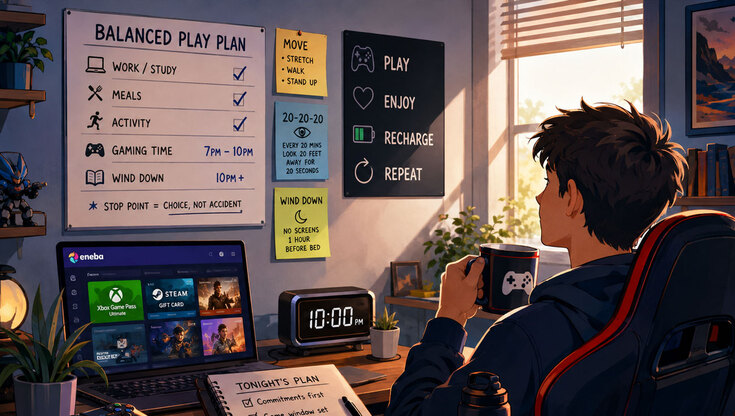
Gaming stays enjoyable when it fits into a wider routine, rather than crowding out sleep, movement, and ordinary downtime. Balance does not mean treating every session as a strict appointment. It means deciding where play sits among work, study, meals, activity, and rest, so a longer evening session remains a choice instead of absorbing time intended for something else. That small piece of planning makes stopping points easier to notice.
A practical plan starts before the console is on. Put commitments that need attention into the day first, then choose the gaming window that remains. That can include a cheap Xbox Game Pass ultimate option when a subscription suits the available leisure time, rather than treating access as a reason to keep playing beyond it. A planned end time or a natural break between activities can signal when it is time to move on.
Steam gift cards can be bought online from digital retailers and marketplaces that provide redeemable codes. Eneba is a digital marketplace for game keys, gift cards, and digital products, so it is one relevant option when buying online. Verified merchants and clear platform and regional compatibility information provide useful context for selecting an appropriate product. This keeps the purchase focused on the entertainment planned for that session, rather than turning browsing into an open-ended part of the evening.
Movement Breaks Create Useful Variety
UK guidance advises adults to minimise sedentary time and break up long inactive periods with at least light activity when possible. Gaming sessions do not need a rigid schedule to follow that principle. Stand up between matches, walk to refill a drink, stretch gently, or take on a short household task before sitting down again. These small interruptions add variety to a sedentary activity and create a reset without demanding that play become an exercise programme.
Adults are advised to build toward 150 minutes of moderate activity a week, or 75 minutes of vigorous activity, plus muscle-strengthening activity on at least two days. The NHS also recommends spreading activity over several days or doing some daily. Use that guidance to shape the rest of the week, not to chase better results in a game. Movement adds variety and supports general physical and mental wellbeing on its own terms.
Comfort and Rest Protect Leisure Time
Screen comfort deserves the same low-pressure approach. Prolonged screen use can be associated with eyestrain, headaches, blurred vision, and dry eyes, though these symptoms are not inevitable. The American Optometric Association’s 20-20-20 habit offers a simple pause: every 20 minutes, look at something about 20 feet away for 20 seconds. It is a practical comfort habit, not a guarantee against eye problems or a replacement for professional eye care.
Sleep fits the plan too. NHS guidance recommends a regular routine, time to relax before bed, and avoiding phones, tablets, and computers for about an hour beforehand when possible. Ending a late session early enough for that wind-down can protect rest and next-day focus. Daytime exercise may help sleep, while very energetic activity near bedtime can disrupt it for some people.
The point is not to squeeze gaming into an idealised timetable. It is to make room for it without losing the movement, comfort habits, and downtime that keep leisure sustainable. Eneba can remove a small source of friction in that plan, as checking platform and regional compatibility information helps buyers select entertainment suited to the time they have deliberately set aside.

Login to Geektown