
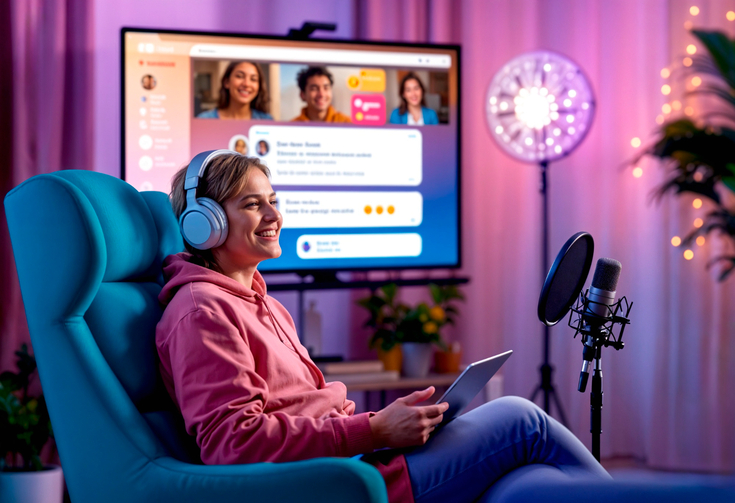
Live streaming has become a permanent part of how people consume entertainment. Whether it’s music, sport, gaming, or live commentary, the format has found its way into nearly every space. The appeal is clear, not only is it in real-time, unscripted, and direct. Viewers don’t just watch; they take part.
The old model of waiting for edited content has slipped away. Instead, audiences want immediacy. They want to hear the slip-ups, see the pauses, and feel like they’re part of the room. That rawness is what keeps people tuned in, not perfection, but presence.
Gaming Led the Charge
In gaming, this change has been especially noticeable. Live streaming is now a regular part of how people play and watch. Live streaming didn’t arrive as a side feature; it became part of the experience. Platforms like Twitch and YouTube Live turned everyday players into broadcasters, and audiences followed in the millions. It started with competitive titles like League of Legends, Counter-Strike, and Dota 2, but quickly grew beyond just high-skill matches. Now, players stream walkthroughs, sandbox building, casual play, horror reactions, and everything in between.
Viewers get involved through live chat, support their favourite streamers directly, and build communities around games, rather than just the games themselves. Personalities now matter as much as performance. In many cases, people tune in not for what’s being played, but for who’s playing it.
Casinos Followed
One of the most striking examples of how live streaming is used very differently is real-money gaming. Several UK online casinos have introduced live dealer tables where actual cards are dealt, wheels are spun, and professional dealers interact with players in real-time. It’s not animated, it’s a live broadcast from a casino studio, with real outcomes and real conversation.
There’s also a rise in game show-style titles, where the experience feels more like watching TV, complete with hosts, set designs, and interactive formats that allow players to get involved while still playing for real stakes. It merges digital gaming with live entertainment in a way that feels far more involved than traditional slots or computer-run tables.
Music Without the Filter
Musicians were quick to adopt live streaming. It offered a simple way to reach fans without dealing with schedules, intermediaries, or expensive setups. Artists now perform acoustic sets from hotel rooms, host Q&A sessions between gigs, or test new tracks live to see what resonates. It’s direct, unscripted, and often more intimate than traditional live shows. What used to require a whole production can now be done from a mobile phone with nothing but a mic and a stable connection.
A New Kind of Sports Coverage
Sport has followed suit. Beyond just broadcasting matches, teams and personalities now offer behind-the-scenes footage, training sessions, and live commentary straight from a phone or laptop. Fans tune in to pre-match talks, post-match breakdowns, or live watch-along with former players. Some commentators have built entire audiences just by reacting to the game in real-time.
This type of content feels closer and more authentic. It skips the polish and gives fans a chance to engage directly, whether through live chat, polls, or instant reactions. The community feels stronger, and the conversation doesn’t end when the game does.
Everyday Life, Streamed
Not everything that’s streamed is produced by professionals. Plenty of people go live just to share what they’re doing. Whether it’s cooking dinner, walking through the park, or chatting about a recent book, the audience for casual, low-pressure streams continues to grow.
Some of the most-watched content isn’t flashy. It’s someone talking to a camera, sharing thoughts, and responding in real-time. It’s not about spectacle, it’s about presence.
Live, But Not Without Pressure
Going live comes with its own challenges. There’s no safety net. No chance to edit a mistake or clean up a bad take. When things go wrong, they go wrong in front of everyone. That can be part of the appeal, but it also means creators are constantly under pressure to perform and engage.
There’s also the matter of consistency. Audiences grow used to regular streams, and staying visible means staying online, sometimes more than creators would like. It’s not always sustainable, especially for individuals running everything themselves.
The Real-Time Future
Live streaming isn’t an add-on anymore, it’s often the main event. Whether it’s an online casino game with a real dealer, a footballer talking tactics, or a quiet acoustic gig streamed from a tour bus, audiences want access that feels direct and honest.
The tools are widely available. The platforms are built for speed. And the appetite is there. What started in gaming has spread far beyond, turning live broadcasts into one of the defining formats of how people now engage with entertainment.

Login to Geektown