
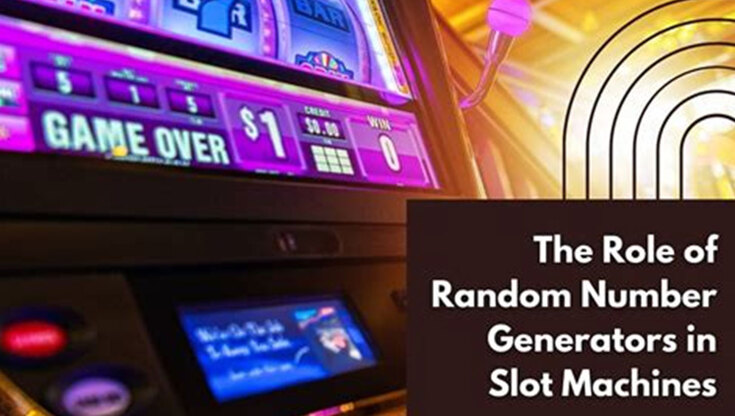
Ever wonder what really happens behind the flashy lights and chimes when you hit “Spin”? Modern slot machines—whether you’re dropping coins into a physical cabinet or clicking reels in your browser—rely on sophisticated software called a Random Number Generator (RNG) to decide every outcome. Let’s peel back the curtain on how these black-box algorithms work, why casinos swear by them, and what it means if you’re playing offshore at casinos without a Swedish license.
What Is an RNG, Anyway?
At its core, an RNG is just a computer program that churns out a sequence of numbers so statistically random that no human can predict the next one. In truly random processes—like radioactive decay or thermal noise—you get unpredictability from physics. In slots, however, we use a pseudo-random number generator (PRNG), which applies mathematical formulas to generate a long, nonrepeating cycle of numbers that appear random.
PRNGs start with a seed—a number based on system time or other variable inputs. From there, each step of the algorithm transforms the seed into a new number, then uses that as the next seed. Provided the PRNG is well-designed, it passes rigorous tests for uniformity (every number is equally likely) and independence (no correlation between successive numbers).
How Spins Are “Dealt”
When you press the “Spin” button, the slot machine software:
- Reads the RNG output: The PRNG spits out a large integer—say, 4,982,316,547.
- Maps the number to reel positions: The software divides that integer by a huge number (the PRNG’s maximum value) to get a fraction between 0 and 1. That fraction determines exactly which symbol shows up on each reel.
- Calculates payouts: Once the reels stop, the game engine checks your symbols against a paytable and credits any winnings.
The magic—and the house edge—happens in the weights assigned to each symbol. Even if a reel shows ten symbols, the RNG mapping can make high-value icons much rarer than low-value ones, ensuring that, over millions of spins, the casino keeps its statistical advantage.
Why You Can’t Cheat the System
Because PRNGs run thousands of cycles per second, the moment you hit “Spin” determines which RNG output you draw. Trying to memorize timing patterns or tap buttons at lightning speed won’t help—by the time your click registers, the RNG has already moved on.
That’s also why regulators demand independent audits. Third-party labs (like eCOGRA or GLI) test every RNG to confirm it meets industry standards for randomness and pays out at advertised return-to-player (RTP) rates.
The Offshore Angle: Playing Beyond Swedish Licensing
In Sweden, every online casino must hold a license from the Spelinspektionen to legally accept kronor deposits and Swedish players. Offshore sites—often licensed in Curacao or Malta—can’t offer real-money play in Swedish krona or advertise in Swedish. Yet many still quietly welcome Swedish gamblers, bypassing Spelpaus self-exclusion and other local safeguards.
Why it matters for RNGs:
- Audit standards vary. A Curacao-licensed platform may have its RNG certified by different labs or under looser rules. That can translate to slightly lower RTPs or less transparency about payout distribution.
- Lack of consumer protection. If you suspect foul play or suspect the RNG isn’t fair, you have no direct Swedish regulator to appeal to.
- Higher volatility. Some offshore sites pack their slot libraries with exotic, untested games that promise bigger jackpots but carry far steeper house edges.
If you’re curious which operators stick to robust RNG audits despite not holding a Swedish license, check out Casinoburst’s guide for a regularly updated directory of offshore sites and their licensing details.
A Simple Demo: Why Timing Won’t Beat a PRNG
Want to see a toy PRNG in action? Imagine this Python-style pseudocode for a classic linear congruential generator (LCG):
python
CopyEdit
seed = current_time_ms() % 2**31

def next_rand():

    nonlocal seed

    seed = (1103515245 * seed + 12345) % 2**31

    return seed
Each call to next_rand() shuffles the seed and returns a new number. Even if you record two consecutive outputs, you’d need to solve for the constants—which casinos guard like trade secrets—to reverse-engineer the next value. In real slot software, algorithms are far more complex and periodically reseeded to foil attackers.
Balancing Trust and Fun
RNGs are the unsung heroes of modern slots, delivering unpredictability that keeps games entertaining and statistically fair. Licensed casinos undergo strict audits to prove their algorithms hold up to scrutiny—and by law, they must display RTP percentages for every game.
Offshore, you’ll still find many reputable operators, but due diligence becomes extra important. Stick to well-known providers, look for clear audit certificates, and keep your bet sizes reasonable. Because when you’re playing “in the wild,” that extra layer of vigilance is the best way to ensure your spins are truly random—and truly fun.
Ever wonder what really happens behind the flashy lights and chimes when you hit “Spin”? Modern slot machines—whether you’re dropping coins into a physical cabinet or clicking reels in your browser—rely on sophisticated software called a Random Number Generator (RNG) to decide every outcome. Let’s peel back the curtain on how these black-box algorithms work, why casinos swear by them, and what it means if you’re playing offshore at casinos without a Swedish license.
What Is an RNG, Anyway?
At its core, an RNG is just a computer program that churns out a sequence of numbers so statistically random that no human can predict the next one. In truly random processes—like radioactive decay or thermal noise—you get unpredictability from physics. In slots, however, we use a pseudo-random number generator (PRNG), which applies mathematical formulas to generate a long, nonrepeating cycle of numbers that appear random.
PRNGs start with a seed—a number based on system time or other variable inputs. From there, each step of the algorithm transforms the seed into a new number, then uses that as the next seed. Provided the PRNG is well-designed, it passes rigorous tests for uniformity (every number is equally likely) and independence (no correlation between successive numbers).
How Spins Are “Dealt”
When you press the “Spin” button, the slot machine software:
- Reads the RNG output: The PRNG spits out a large integer—say, 4,982,316,547.
- Maps the number to reel positions: The software divides that integer by a huge number (the PRNG’s maximum value) to get a fraction between 0 and 1. That fraction determines exactly which symbol shows up on each reel.
- Calculates payouts: Once the reels stop, the game engine checks your symbols against a paytable and credits any winnings.
The magic—and the house edge—happens in the weights assigned to each symbol. Even if a reel shows ten symbols, the RNG mapping can make high-value icons much rarer than low-value ones, ensuring that, over millions of spins, the casino keeps its statistical advantage.
Why You Can’t Cheat the System
Because PRNGs run thousands of cycles per second, the moment you hit “Spin” determines which RNG output you draw. Trying to memorize timing patterns or tap buttons at lightning speed won’t help—by the time your click registers, the RNG has already moved on.
That’s also why regulators demand independent audits. Third-party labs (like eCOGRA or GLI) test every RNG to confirm it meets industry standards for randomness and pays out at advertised return-to-player (RTP) rates.
The Offshore Angle: Playing Beyond Swedish Licensing
In Sweden, every online casino must hold a license from the Spelinspektionen to legally accept kronor deposits and Swedish players. Offshore sites—often licensed in Curacao or Malta—can’t offer real-money play in Swedish krona or advertise in Swedish. Yet many still quietly welcome Swedish gamblers, bypassing Spelpaus self-exclusion and other local safeguards.
Why it matters for RNGs:
- Audit standards vary. A Curacao-licensed platform may have its RNG certified by different labs or under looser rules. That can translate to slightly lower RTPs or less transparency about payout distribution.
- Lack of consumer protection. If you suspect foul play or suspect the RNG isn’t fair, you have no direct Swedish regulator to appeal to.
- Higher volatility. Some offshore sites pack their slot libraries with exotic, untested games that promise bigger jackpots but carry far steeper house edges.
A Simple Demo: Why Timing Won’t Beat a PRNG
Want to see a toy PRNG in action? Imagine this Python-style pseudocode for a classic linear congruential generator (LCG):
python
CopyEdit
seed = current_time_ms() % 2**31

def next_rand():

    nonlocal seed

    seed = (1103515245 * seed + 12345) % 2**31

    return seed
Each call to next_rand() shuffles the seed and returns a new number. Even if you record two consecutive outputs, you’d need to solve for the constants—which casinos guard like trade secrets—to reverse-engineer the next value. In real slot software, algorithms are far more complex and periodically reseeded to foil attackers.
Balancing Trust and Fun
RNGs are the unsung heroes of modern slots, delivering unpredictability that keeps games entertaining and statistically fair. Licensed casinos undergo strict audits to prove their algorithms hold up to scrutiny—and by law, they must display RTP percentages for every game.
Offshore, you’ll still find many reputable operators, but due diligence becomes extra important. Stick to well-known providers, look for clear audit certificates, and keep your bet sizes reasonable. Because when you’re playing “in the wild,” that extra layer of vigilance is the best way to ensure your spins are truly random—and truly fun.

Login to Geektown