
Not Always About the Big Stuff
When people talk about gaming, the conversation usually swings toward the big hitters, the sprawling RPGs, the blockbusters with film-worthy cutscenes, or the esports matches that feel more like sporting finals. Those titles grab the spotlight, and rightly so.
But if you look around, there’s something else happening in parallel. Casual games, short, simple, often played in the gaps of daily life, have quietly become part of the way geeks play. They don’t compete with the big releases; they exist alongside them, filling moments in between. And that might be why they’ve stuck.
Why Quick Games Keep Us Coming Back
Part of their charm is practical. A casual game doesn’t ask for a console upgrade, a three-gigabyte download, or an evening blocked out in the calendar. It just loads, and within seconds, you’re playing. That’s a big deal in a world where attention is constantly pulled in ten directions at once.
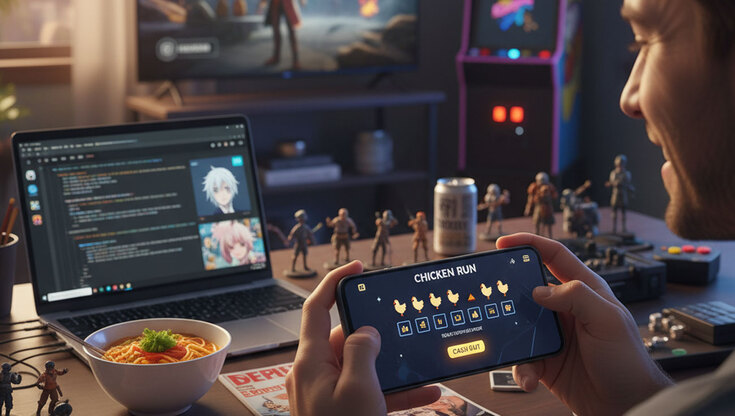
But there’s more going on than convenience. The clever ones build suspense out of simplicity. Think of the growing popularity of the chicken mini game. The idea is easy enough to grasp, yet every click forces you to decide: cash out now, or risk going one step further? That moment of hesitation, that “should I, shouldn’t I”, is exactly what keeps people returning. It’s simple, yes, but also strangely gripping.
Echoes of the Past
What’s interesting is how much this mirrors the roots of gaming itself. In the golden age of arcades, titles like Pac-Man and Space Invaders weren’t long journeys; they were tight little challenges designed for repeat play. People lined up with coins in hand, ready for another round.
Today’s mini games aren’t in smoky arcades anymore, but the spirit is the same. Fast to pick up, fun to replay, and never far away, except now the arcade fits into a browser tab or a phone screen. In that sense, casual games aren’t new at all. They’re a continuation of something that’s been part of geek culture since the beginning.
The Psychology of a Quick Break
There’s also a science-backed reason these games feel so satisfying. Psychologists studying attention often point out that short, structured activities can refresh the mind. A five-minute game doesn’t drain energy; it resets it.
So playing a casual game between emails or during a train ride isn’t always procrastination. It can be the mental equivalent of stretching your legs, a small ritual that helps you refocus afterwards. For geeks juggling work, media, and community conversations, that reset has real value.
More Than Just a Distraction
Of course, it’s easy to dismiss these titles as light entertainment compared to the grand sagas of modern gaming. But doing so misses the point. Casual games experiment. They’re playful, sometimes quirky, and often willing to test ideas big studios wouldn’t touch.
And that willingness fits neatly into geek culture. Fans have always embraced side quests, alternate storylines, and niche experiments. A mini game might not dominate the news cycle, but it often captures that spirit of curiosity, a reminder that fun doesn’t have to be measured in hours played.
Sitting Beside the Giants
So, where do casual games sit in the bigger picture? Not beneath the giants of geek entertainment, but beside them. They don’t need to generate queues outside midnight launches or headline the next convention. Their role is different: accessible, flexible, and ready whenever you are.
As geek culture grows broader, spanning comics, anime, streaming binges, and tabletop revivals, casual games fit naturally into the mix. Some experiences are vast and demanding; others are short and playful. Both types matter, and both have their place.
A Small but Lasting Joy
In the end, what casual games remind us is that play isn’t about size. It’s about the spark. Geek culture has always thrived on variety, on the joy of discovering something unexpected, whether that’s a sprawling fantasy world or a clever little browser game.
Sometimes, the most memorable moments aren’t in the hundred-hour campaign, but in the few minutes stolen during a break, the ones that make you smile, hold your breath, or just click “one more time.”

Login to Geektown