
As 2025 limps toward the finish line, the BBC is offering what may be the most thematically appropriate end-of-year viewing imaginable. A massive boat sinks. Again. Slowly. In excruciating detail. For some of us, that feels… on brand.
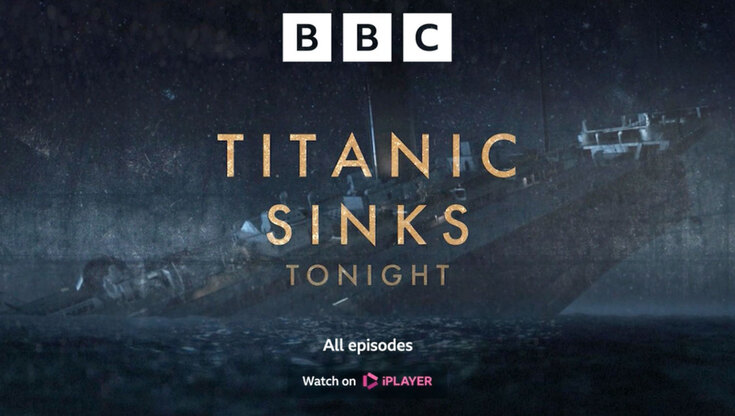
‘Titanic Sinks Tonight’ is a new four-part dramatised documentary series heading to BBC Two and BBC iPlayer later this month, retelling the final 160 minutes of the Titanic disaster minute by minute, using the real words of the people who were actually there.
No, Celine Dion does not appear. Yes, there is still plenty of room on that door. And no, Jack is not invited.
Rather than focusing on rivets, bulkheads, or how very confident Edwardians were about engineering, the series flips the usual Titanic approach on its head. This time, the ship is background noise. The people are the story.
As Executive Producer Kieran Doherty puts it:
“Instead of studying the ship as an object, we followed the human experience as it unfolded.”
And more bluntly:
“Their testimonies guide every beat of the series. It’s not about how the Titanic was built, or even how it sank – it’s about what it was really like to be there.”
Minute-by-Minute Into Disaster
The series opens on Sunday, 14th April 1912, five days into Titanic’s maiden voyage to New York. She is the largest ship the world has ever seen, carrying 2,208 passengers and crew, many of them convinced they are aboard something close to indestructible.
At 11.40pm, that illusion cracks. The Titanic strikes an iceberg in the Atlantic. Initially, there is little panic. Then two watertight compartments are breached. Then three. Then four. When ship designer Thomas Andrews realises a fifth compartment has been compromised, the maths becomes unavoidable.
Titanic has just 117 minutes left.
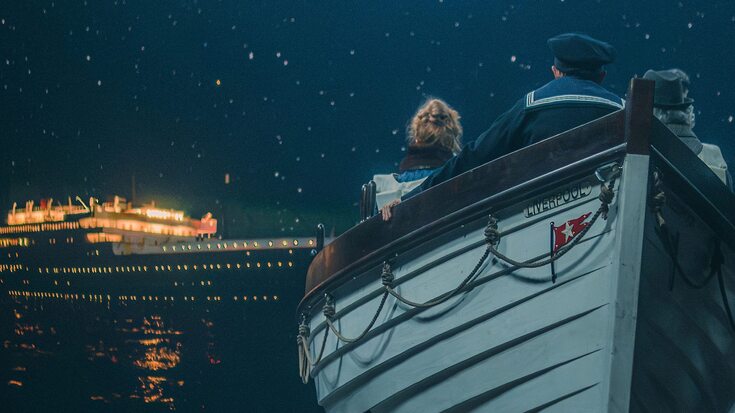
Across four episodes, ‘Titanic Sinks Tonight’ charts what happens next in near real time. The slow spread of information. The dawning realisation that there are not enough lifeboats. The chaos, fear, bravery, selfishness, denial, and human stubbornness that follow as the ship heads for the inevitable.
By 2.20am, Titanic is gone. Over 1,500 people are left in the freezing Atlantic. Silence gives way to screams.
Real Words, Real People, Nothing Invented
What sets the series apart is its absolute refusal to embellish. The production team spent years combing through letters, telegrams, memoirs, newspaper interviews, radio recordings, and both the US and UK public enquiries.
There are no composite characters. No invented dialogue. Every moment is built from eyewitness testimony.
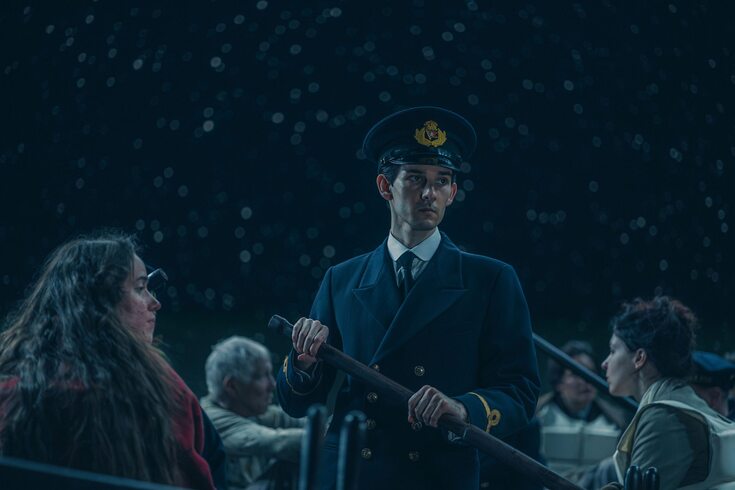
The cast has been carefully selected to physically resemble the real people whose words they are speaking, grounding the drama in lived experience rather than spectacle.
Among those portrayed are Tyger Drew-Honey (Outnumbered) as Harold Bride, the ship’s 22-year-old radio operator, Vicky Allen (The Nevers) as stewardess Violet Jessop, one of the most famously resilient survivors in maritime history, and Rhys Mannion (The Last Kingdom) as 17-year-old first-class passenger Jack Thayer.
They are joined by Adam Rhys-Charles (Vikings: Valhalla) as officer Charles Lightoller, Lisa Dwyer-Hogg (Derry Girls) as second-class passenger Charlotte Collyer, Hannah Wengård as Finnish emigrant Anna Sjöblom, Andrew Doherty (Blue Lights) as Irish third-class passenger Eugene Daly, and Jonny Everett (Masters of the Air) as ship designer Thomas Andrews.
Expert contributors, including JJ Chalmers, Professor Suzannah Lipscomb, Admiral Lord West and novelist Nadifa Mohamed, provide context and analysis as events unfold.
Built in Belfast, In the Ship’s Shadow
Appropriately, the series was filmed in Belfast, the birthplace of Titanic herself, using cutting-edge virtual production at the newly opened Studio Ulster.
Much of the visual effects work was created in advance, allowing scenes to be filmed largely in camera, with physical sets extended digitally to recreate the scale of the ship and the surrounding ocean.
Series Director Hugh Ballantyne explains:
“Virtual production allowed the team to world build in an entirely new way, creating depth and scale for our series.”
And Belfast’s role was more than practical. It was emotional.
“Suddenly we weren’t just making a show; we were working in the shadow of one of the world’s most iconic pieces of engineering,” says Doherty.
The result aims to be both technically precise and emotionally devastating. Titanic obsessives will undoubtedly argue over details. Everyone else will likely be too busy quietly spiralling.
A Familiar Story, Told the Hard Way
Titanic has been depicted countless times over the last century, but ‘Titanic Sinks Tonight’ strips away the romance, the swelling music, and the cinematic shortcuts.
This is not about star-crossed lovers or dramatic slow-motion heroics. It is about confusion in dark corridors. Orders shouted and misunderstood. Choices made too late. People doing their best with the information they had, which was often very little.
It is also, intentionally, uncomfortable viewing. Ending 2025 by watching a slow-motion catastrophe unfold feels oddly fitting. Cathartic, even. At the very least, it puts things in perspective.
‘Titanic Sinks Tonight’ is a four-part dramatised documentary series, starting Sunday, 28th December on BBC Two at 9pm, with all episodes on BBC iPlayer.

Login to Geektown