
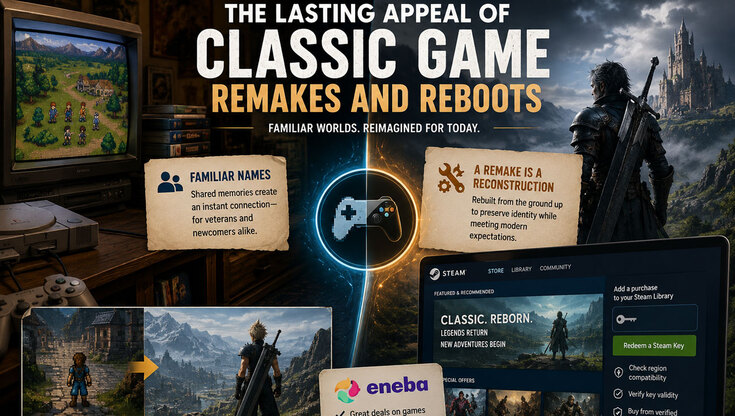
Classic returns draw attention because they offer a recognisable starting point. The appeal is often reduced to nostalgia, yet that explanation misses the work behind a successful remake: it must retain an identity people remember and present it in a form newcomers can approach. That tension can spark interest before anyone plays the new version. A 2025 study of 417 gamers examined nostalgia and remakes, though its gamer-focused sample does not represent the mainstream market.
These activation codes add a purchased title to a Steam library after redemption. Buying Steam game keys on Eneba offers a route to current releases and revived classics; buyers should check regional fit and key validity. The marketplace presents platform and regional information, and listings can come from verified sellers; those details settle compatibility before redemption.
A remake is a reconstruction, not a replay
The word remake can suggest a straightforward return, but documented developer descriptions point to a more demanding process. PlayStation described Star Wars: Knights of the Old Republic Remake as a ground-up rebuild that touches almost every aspect of the original. Dragon Quest VII Reimagined’s developers likewise described reviewing every element from the beginning and rebuilding the game for a wider audience. This is why the label should not be treated as a promise of simple visual polish.
That scale clarifies the preservation versus reinterpretation debate. A return needs the core identity of its world, characters or story, but presentation, controls and structure may be rebuilt for modern hardware and current expectations. Copying every detail would not capture the point of a substantial remake because the task is to carry a familiar identity into a different technical context. The result can be recognisable without functioning as a museum piece.
Familiar names create a shared entry point
Recognition gives a returning franchise an immediate frame of reference. Nielsen reported in 2021 that remakes, remasters and reboots appealed both to players seeking nostalgia and to people who were not born when the originals launched. Its reporting also found that digital revenue for leading remakes nearly doubled between 2018 and 2020, a historical snapshot that shows familiar brands were significant commercial performers in that period. That attention begins with familiarity, not a guarantee that every return will earn lasting approval. For publishers, that recognition provides a clear starting point for communication, even though the work itself can demand extensive reconsideration.
Interest before release can be just as revealing. Nielsen identified Final Fantasy VII Remake as one of the most anticipated remake, remaster or reboot releases in its previous eight years of game tracking. The example does not identify a universal wish list, but it does show how a recognised franchise can invite attention from established fans and newcomers alike. It also explains why discussion around an announcement can focus on what should change and what should remain.
The pull of a revival rests on a clear promise: recognition paired with reconsideration. A well-judged remake gives earlier players a reason to revisit a world and gives new audiences an accessible entry into a classic series. The choice becomes easier when the edition fits the intended account and platform. For readers deciding which return to try, digital marketplaces like Eneba offer deals on games, gaming top-up, and more.

Login to Geektown