
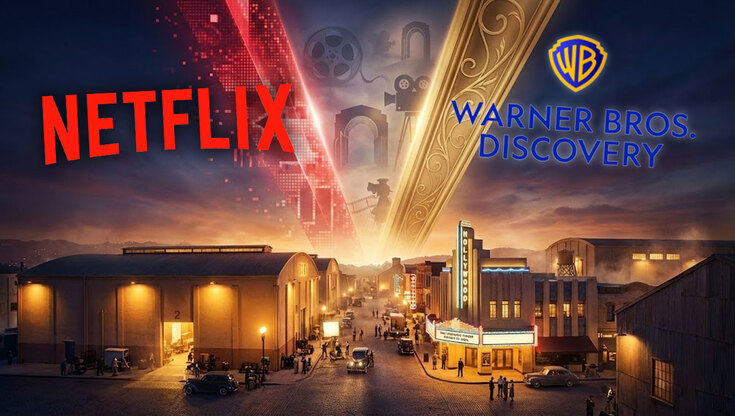
In news that feels like someone hit shuffle on the Hollywood timeline, Netflix has struck a deal to acquire Warner Bros for an eye-watering enterprise value of $82.7 billion, with an equity value of $72 billion. The deal will see Netflix pick up Warner Bros’ film and TV studios, HBO and HBO Max, along with a century of studio history and some of the most valuable IP on the planet.
The acquisition is expected to close in 12 to 18 months, after Warner Bros. Discovery completes its previously announced plan to spin off its Global Networks division into a new company called Discovery Global, which will keep the linear channels and Discovery+, while Netflix takes the studio and streaming crown jewels.
What exactly is Netflix buying?
Under the deal, Netflix will acquire Warner Bros’ film and television studios, HBO and HBO Max, plus their associated libraries and brands, including DC. The remaining linear networks side of the business, including things like CNN, TNT Sports in the US and various Discovery channels, will live on under Discovery Global as a separate publicly traded company.
Financially, WBD shareholders are set to receive $23.25 in cash and $4.50 in Netflix stock per share, valuing Warner Bros. Discovery at $27.75 a share and giving that $82.7 billion total enterprise value headline figure. Both boards have unanimously approved the deal, which is very polite of them, given what a headache this is going to be for regulators.
The official line: “entertain the world”, but bigger
Netflix is framing this as the ultimate content combo plate. In the official announcement, co CEO Ted Sarandos said:
“Our mission has always been to entertain the world. By combining Warner Bros.’ incredible library of shows and movies – from timeless classics like Casablanca and Citizen Kane to modern favorites like Harry Potter and Friends – with our culture-defining titles like Stranger Things, KPop Demon Hunters and Squid Game, we’ll be able to do that even better. Together, we can give audiences more of what they love and help define the next century of storytelling.”
Co CEO Greg Peters called it a way to “significantly expand U.S. production capacity” and drive more subscribers and revenue, while Warner Bros. Discovery boss David Zaslav went full studio history mode:
“Today’s announcement combines two of the greatest storytelling companies in the world to bring to even more people the entertainment they love to watch the most. For more than a century, Warner Bros. has thrilled audiences, captured the world’s attention, and shaped our culture. By coming together with Netflix, we will ensure people everywhere will continue to enjoy the world’s most resonant stories for generations to come.”
Netflix says it intends to maintain Warner Bros’ current operations and keep theatrical releases for films, rather than turning everything into straight-to-streamer drops. Whether that survives contact with shareholder expectations is a question for another day.
The bidding war: Netflix beats Comcast and Paramount
This deal did not happen in a vacuum. Warner Bros. Discovery has effectively been walking around Hollywood with a “for sale” sign on it for months, inviting offers from three big players: Comcast, Netflix and Paramount Skydance.
Comcast reportedly wanted to merge Warner Bros with NBCUniversal under its umbrella, which would have created a monster pairing Sky, Universal and Warner in one giant bundle. Paramount Skydance went in for the whole thing, including linear networks, with a cash-heavy offer backed by serious debt. Netflix, by contrast, was only interested in the studio and streaming pieces, not the old-school channels. In the end, it is Netflix that walked away with the prize.
Unsurprisingly, this has already kicked off political and industry pushback, with producers and rivals warning regulators that letting the world’s biggest streamer swallow HBO and Warner’s studios might not exactly scream “healthy competition”.
What about HBO Max and the UK situation?
Here is where things get particularly spicy for UK viewers. Up until this morning, the plan was:
- Warner Bros. Discovery splits into Warner Bros. (studios + HBO/HBO Max) and Discovery Global (linear networks).
- HBO Max (or Max, depending on which branding mood they are in that week) comes to the UK and Ireland around March 2026, bundled into Sky and Now plans via a new distribution deal.
Now you have Netflix stepping in to buy the very bit of WBD that was supposed to be launching HBO Max here.
Officially, Netflix is promising to “maintain Warner Bros’ current operations”, which on paper includes the HBO Max rollout and the existing Sky arrangements. In practice, if this deal clears regulators, Netflix will eventually have the power to decide whether HBO Max continues as a standalone brand, gets folded into Netflix, or turns into some kind of hybrid. That is speculation at this point, but it is the logical question everyone is now asking.
For Sky customers, the current deal that keeps some HBO shows on Sky and bundles the ad-supported version of Max should still launch in April 2026, because that sits on contracts that predate this acquisition. After that, everything gets much murkier, very fast.
The Netflix algorithm meets HBO prestige
Here is where we park the corporate press release and talk about the creative bit, because that is the part that actually matters to most of us.
Out of the three serious bidders circling Warner, Comcast probably made the most sense if you care about HBO-style prestige TV and a relatively stable home for it. A pairing of HBO and Sky under the Comcast umbrella would at least have been a familiar flavour of chaos. Netflix is a very different beast.
Netflix has never been shy about how it runs things. The famous algorithm does not care whether a show is being hailed as the next golden age masterpiece. It cares about completion rates, growth and whether something hits whatever internal targets it is supposed to hit in a very short window. If it does not, it is straight onto the pile with ‘KAOS’ and ‘Dead Boy Detectives’, two stylish, interesting genre shows that still ended up cancelled after one season despite having relatively solid viewing figures and fan buzz.
Now imagine that same system sitting over the top of HBO’s odder, more experimental output. Would a show like ‘Barry’ have survived past one season if it lived or died purely on early binge metrics? Would ‘The Chair Company’ or ‘Curb Your Enthusiasm’ have been given time to grow in an environment where everything has to arrive fully formed and game-changing in its first 28 days? That is the uncomfortable question.
The best case scenario here is that Netflix has the sense to treat HBO as a slightly separate creative lane, with different rules, different success metrics and a bit more patience, instead of just shoving everything into the same giant content hopper. The worst case is that the famously ruthless cancellation machine gets handed one of the most respected prestige brands in television and is told to “optimise”.
What this could mean for viewers
For viewers, the immediate spin is “more stuff in one place”. If this goes through, Netflix could end up with:
- Its existing originals, from ‘Stranger Things’ to ‘Squid Game’.
- HBO’s prestige catalogue, including things like ‘Game of Thrones’ and its spin-offs.
- Warner’s film slate and franchises, from the DC universe to Wizarding World titles.
On paper, that sounds like the most stacked streaming library in existence. In reality, a lot depends on how pricing, bundling and regional licensing shake out.
Regulators are absolutely going to crawl all over this deal, and rivals will lobby hard to either kill it or attach serious conditions. That process alone could take the bulk of 2026, and there is every chance the final shape of the deal looks different to what is being announced today.
The bottom line
Netflix is not just buying a studio. It is trying to buy a century of Hollywood branding, HBO’s prestige halo and one of the few remaining libraries that can still shift the balance of power in the streaming wars.
If it goes through, this will reshape the entire industry in a way we have not really seen since the Disney-Fox deal. The big unknown is whether Netflix can resist trying to bend HBO-style storytelling to fit its existing algorithm, rather than letting that side of the business do what it does best.
Either way, the age of neatly separated streamers is over. We are now in the “megacorp absorbs megacorp” chapter of TV history, and this is about as mega as it gets.

Login to Geektown