
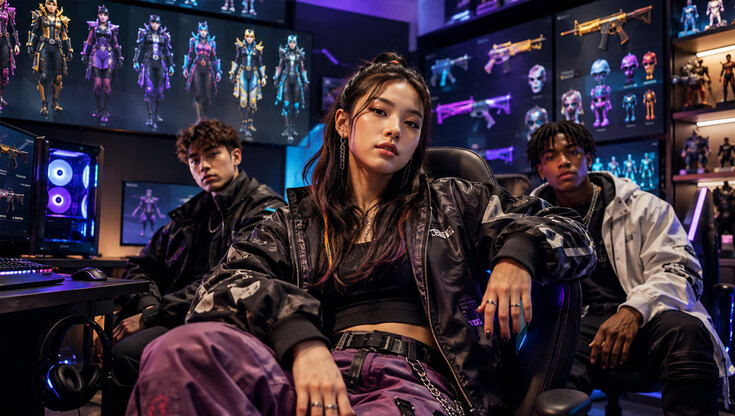
Recent research has sharpened how gaming communities can read avatar customisation. Cosmetics are part of public self-presentation, while skins alter appearance without changing a character’s core gameplay mechanics. A choice of colour, theme, or visual style can communicate personal taste and affiliation in a shared space without granting an in-game advantage.
Competitive games place that expression in full view, where a familiar design can become part of a player’s recognisable presence. For someone browsing CSGO skins, the appeal can lie in selecting an appearance that fits a personal preference or a community’s shared aesthetic. It offers a clear example of cosmetic collecting within competitive play, where visual items can signal attachment to a game without proving ability or defining the person behind the screen.
Digital fashion as self-presentation
Avatar options can give players room to explore how they want to appear around others. A 2024 study of avatar customisation found that clothing and appearance choices may support the exploration and expression of gender identity. The study describes customisation as an ongoing space for experimentation, rather than a single decision made at character creation.
Representation is part of this conversation too. A peer-reviewed study of 158 survey responses found that purchasable skins can help players access alternative demographic appearances, while also identifying unequal experiences of representation among players of colour. Cosmetic choice can expand opportunities for self-expression, yet paid representation can create uneven access to those opportunities.
The social value of an item comes from interpretation. One group may read a distinctive appearance as evidence of cultural knowledge, while another may see a favourite character or a particular visual theme. Recent research on virtual gear links scarcity and symbolism with social identity, but no cosmetic carries one fixed meaning for every player or community.
Community signals and informed choices
Friends and online groups also shape what players notice and adopt. Research using data from 897,765 online-game players found that social influence affected adoption of virtual products, with stronger effects for upgraded products and denser networks. Shared aesthetics can therefore become part of participating in a social circle, rather than remaining a purely private preference.
CD keys are digital codes that buyers use to activate digital games after purchase. Eneba is one strong option for comparing choices across platforms and regions, since its product pages provide platform and regional information alongside products from verified merchants.
Visible signals can support belonging, but they can also affect how people are treated. A study of World of Tanks players connected visible group markers, including skill rank and age-related status, with both community experiences and social discrimination. That research did not test skins specifically, yet it underlines why appearance and other public markers deserve thoughtful interpretation inside competitive spaces.
Gaming fashion is likely to remain a useful language for identity, provided communities leave room for different tastes and forms of representation. The value of a cosmetic comes through the relationships and meanings players attach to it, not through an automatic measure of status. By presenting platform and regional details, Eneba can help buyers choose relevant digital products while keeping the focus on the style and community connection they want to express.

Login to Geektown