
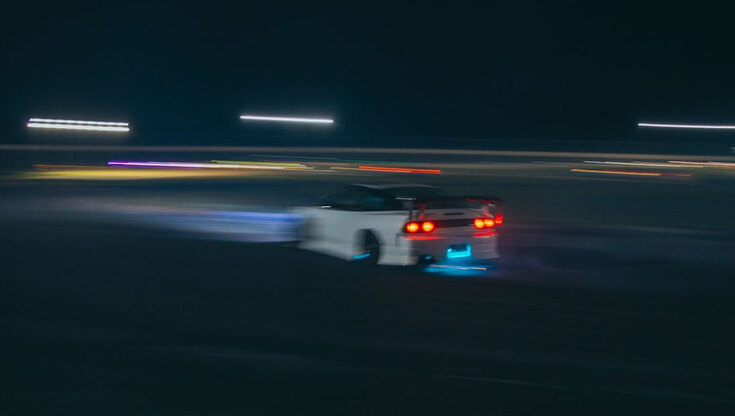
Everyone loves a good car chase movie, whether it’s The Pinchcliffe Grand Prix or the Fast and Furious franchise. The adrenaline, suspense, and anticipation are key elements in every car movie, and the crashes (as long as they’re well-made) are more impactful to the story.
However, what’s truly behind the scenes? Besides some real stunts and skills, filmmakers rely on CGI (Computer-Generated Imagery) to make certain actions and visuals closer to realism, so combining practical and digital effects is key to enhancing the impact of these movies.
But sometimes pulling up these stunts in real life can be dangerous (and impossible), so we’ll analyse some movie car crash scenes and rate their possibility in the following.
Car crash scenes show how easy accidents can happen
If you’re a fan of The Big Lebowski, you may remember the car crash scene caused by a burning joint. The Dude, also known as Jeffrey Lebowski, tries to escape from the police when his burning joint drops into his lap, followed by him spilling his beer and losing control of the car. Of course, just a bit later, he rams into a dumpster, and the so-called chasing scene is at least as impressive.
While the movie is one of the best comedies of our times, albeit being released in 1998, it includes more realism than improved scenes that show just how one small occurrence can lead to an accident. It’s well-known that vehicle accidents in the UK are mostly triggered by distraction, as well as careless and inconsiderate driving.
Unfortunately, the rest of the road participants are the ones affected by this driving behaviour, and this is how car crashes happen. Victims may experience head trauma, neck injuries, or even broken bones following the collision, along with having their car damaged. Handling the situation as soon as possible is crucial, so getting checked by a doctor, reporting the crash, and contacting a solicitor can increase the chances of receiving compensation.
Car crashes that might spark some new ideas
The Die Hard franchise is one of the most appreciated due to John McClane’s personality and abilities to make things explode. The role played by Bruce Willis involves him going through hell trying to end his missions, whether by scaling exploding buildings or launching cars into helicopters. While defying the laws of physics isn’t uncommon in car movies, they can definitely inspire the wrong audience to drive a vehicle.
Several cases in the UK have demonstrated how teenagers put themselves and others in danger by engaging in certain risky activities. From the 2017 Snapchat challenge of reaching 100mph on country roads to the most recent social media car stunt in Northampton, where teenagers were pulled onto a folding table by a vehicle, a popular trend on TikTok has emerged.
It’s easy to see how these seemingly epic and fun scenes can encourage others to act in a similar way, just for the fun of it, but these influences are dangerous. Not only did the stunt lead to permanent injuries, but it was also shared with millions of other users who can’t see the consequences behind videos on the internet.
Car crashes that are fast and furious
The Fast and Furious franchise was so popular a few years ago due to its action scenes, fancy cars, and crazy stunts that it defined the 21st century of the film industry. Vin Diesel and Paul Walker are now legends who have shaped generations of car enthusiasts, and may have also had a lasting impact on drivers in real life.
Not only stuntmen on the movie set were critically injured while performing some of their tasks, but some believe that the rate of car accidents increased following movies like Fast and Furious being in theatres. Suspicions on this subject started about seven years ago, when research from Harvard Medical School suggested that people watching movies are more likely to hit the accelerator too hard.
In the UK, statistics show that 44% of drivers exceed the speed limit on roads where the limit is 30mph, such as roads and motorways. Consequently, more than half of fatal collisions are related to at least one speed-related factor. According to further data, most of these drivers are aged between 17 and 34, and they’re most likely to trigger these occurrences on weekends, especially in the evenings and overnight.
How dangerous is pop culture for road driving?
Movies are supposed to be influential in a good way, but more often than not, we see cases of people who take films seriously and copy what they see on screen in real life. Some of the most dangerous observations lead us to TikTok challenges that teenagers will absolutely try at home.
Unfortunately, the algorithms used by social media apps are challenging to control or oversee, which is why there’s no true regulation on the processing of children’s data. Furthermore, many teenagers and young adults use their mobile phones to scroll through social media or text while driving, which is not only illegal but also considerably risky, as almost everyone on the road is distracted and driving recklessly.
It’s essential for teenagers and young people to receive the right guidance on distinguishing between real life and movies. There’s nothing more important than driving safely and minding your own and others’ safety while on the road, since these are not the places where races and stunts should happen.
Fortunately, the yearly rate of road accidents has decreased considerably in the past few decades, as high-tech vehicle solutions have improved, along with road development. However, things could always improve when it comes to road discipline, which is why practicing due diligence is ideal.
What do you think about the influence of car movies on individuals?
While car movies are some of the best at representing adrenaline and cool characters, they may sometimes inspire people to attempt such stunts in real life. This can lead to accidents caused by distraction, exceeding the speed limit, or attempting social media challenges. Therefore, pop culture and TikTok can have a negative impact on young people, as they may be encouraged to try dangerous things without the necessary experience or skills.

Login to Geektown